Plug, Baby, Plug! (A Montana Oil Well Story)
Curtis Shuck has a problem - he can't stop plugging orphaned oil wells. As Founder and Chairman of The Well Done Foundation, he’s confronting an environmental catastrophe hiding in plain sight.
 The Well Done Foundation is on a mission to leave the environment better than they found it, all by plugging old oil wells.
Photo: The Well Done Foundation
The Well Done Foundation is on a mission to leave the environment better than they found it, all by plugging old oil wells.
Photo: The Well Done Foundation
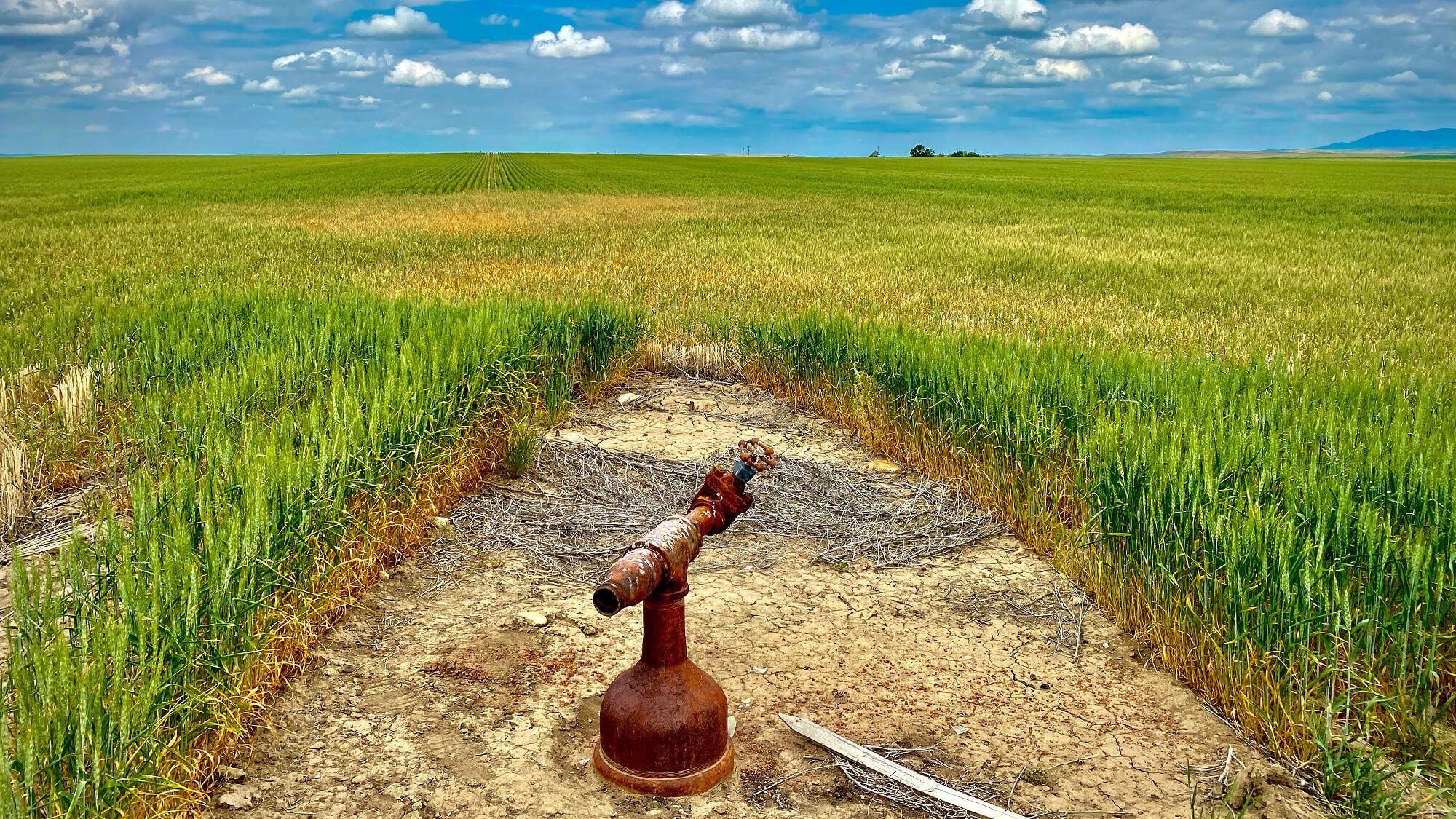
Curtis pressed hard on the accelerator, but he couldn't outrun what he'd seen that day. It was midnight on July 25th, 2019, and the journey from the Kevin-Sunburst Oilfield back to Bozeman, Montana, should have been routine, another day consulting with farmers about grain shipments. Instead, images of orphaned oil wells haunted every mile: oil-stained earth, rusted equipment, scattered debris, and methane gas venting into the darkness.
Unable to shake the vision, Curtis knew what he had to do. He called his wife.
“By the time I got back to Bozeman that night, we had secured the domain names for The Well Done Foundation, had registered the business with the Secretary of State electronically and crafted a vision document. All at 85 miles an hour on the freeway,” he shares.
What could drive a seasoned oil industry executive to launch a nonprofit at breakneck speed? Earlier that day, Curtis had encountered his first orphaned well, an abandoned oil and gas site with no financially responsible party. Crude oil soaked the ground. Industrial garbage lay scattered: steel, timber, equipment simply left behind.
“It was really embarrassing for me as an industry professional. How in the world can somebody just walk away from this?” Beyond the visual blight, methane was leaking directly into the atmosphere, a gas 84 times more damaging than carbon dioxide.
What he had witnessed at the site violated everything he'd learned growing up in 1970s Anchorage, Alaska, where rugged country bred simple values. “Most of us were brought up to just leave things better than you find them, right? And you should never leave a mess for someone else to clean up.”
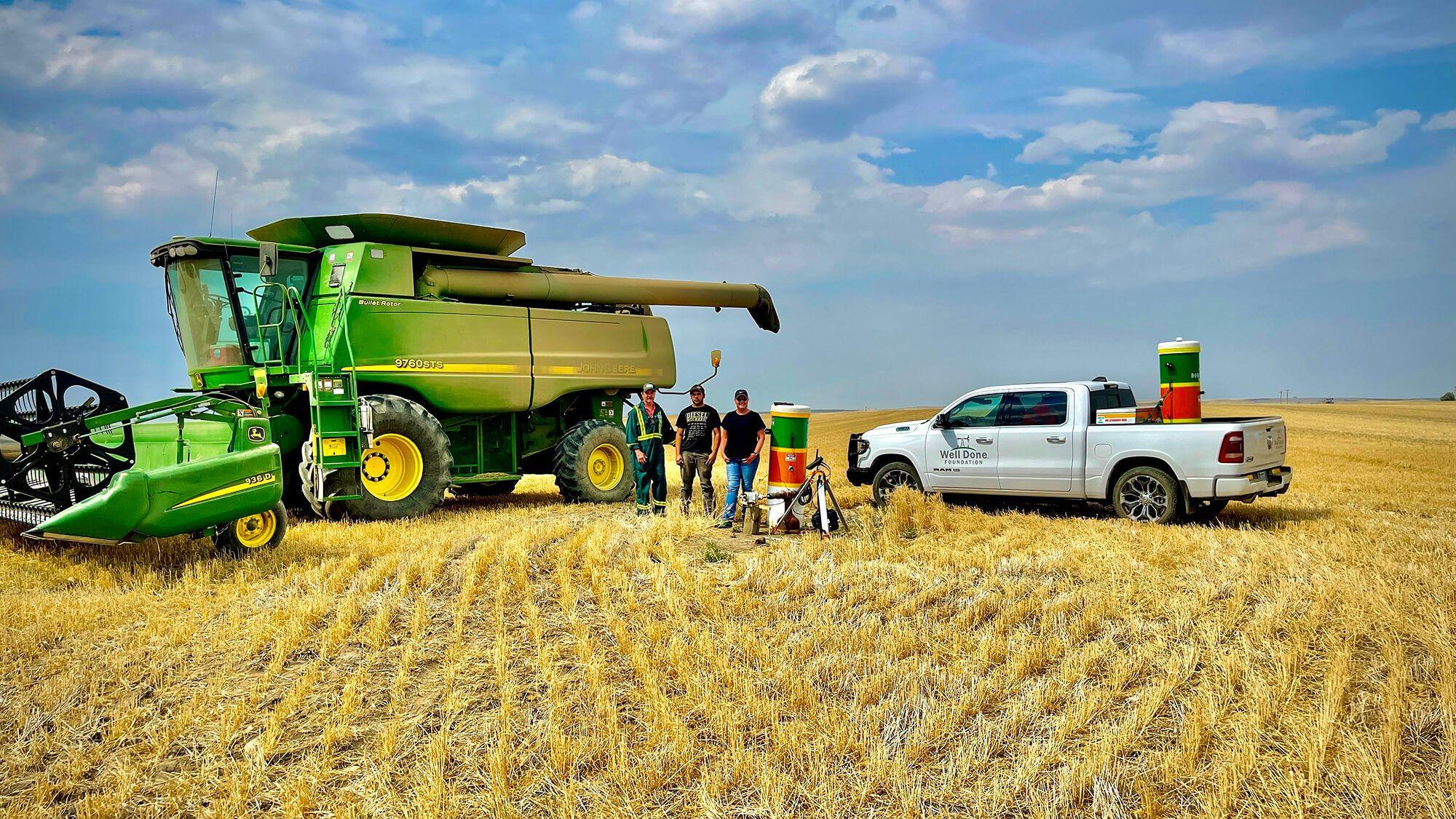 The Well Done Foundations' five-step process systematically targets wells from a few thousand to over 5,000 feet deep, plugging old wells like you’d fix a broken straw.
Photo: The Well Done Foundation
The Well Done Foundations' five-step process systematically targets wells from a few thousand to over 5,000 feet deep, plugging old wells like you’d fix a broken straw.
Photo: The Well Done FoundationThose glaciers of his youth have since retreated dramatically. But it wasn't climate change in the abstract that would transform this 30-year oil industry veteran to environmental champion; it was a moment of reckoning in his professional life.
What Curtis had witnessed was just the tip of the iceberg. The numbers are staggering: an estimated 3.5 million orphaned wells are scattered across America, many releasing methane and toxic chemicals like benzene into nearby communities. Some hide in people's front yards, under porches, even beneath buildings; industrial ghosts turned neighbourhood hazards.
Rather than point fingers or debate policy, Curtis chose action. “We're just in the get-stuff-done business, right? Our approach is to pick up our tools and go out to work every day and hopefully leave things better than we found them.”
The foundation’s #onewellatatime philosophy transforms an overwhelming crisis into manageable victories. Their five-step process systematically targets wells from a few thousand to over 5,000 feet deep. The actual plugging resembles fixing a broken straw. Teams flush the wellbore with fresh water and lower a pipe to the bottom to pump cement upward. Using controlled explosives, they perforate the casing so cement flows inside and out, preventing gas migration. Finally, they cut off the surface casing and backfill. “Then it's like it was never there,” Curtis shares.
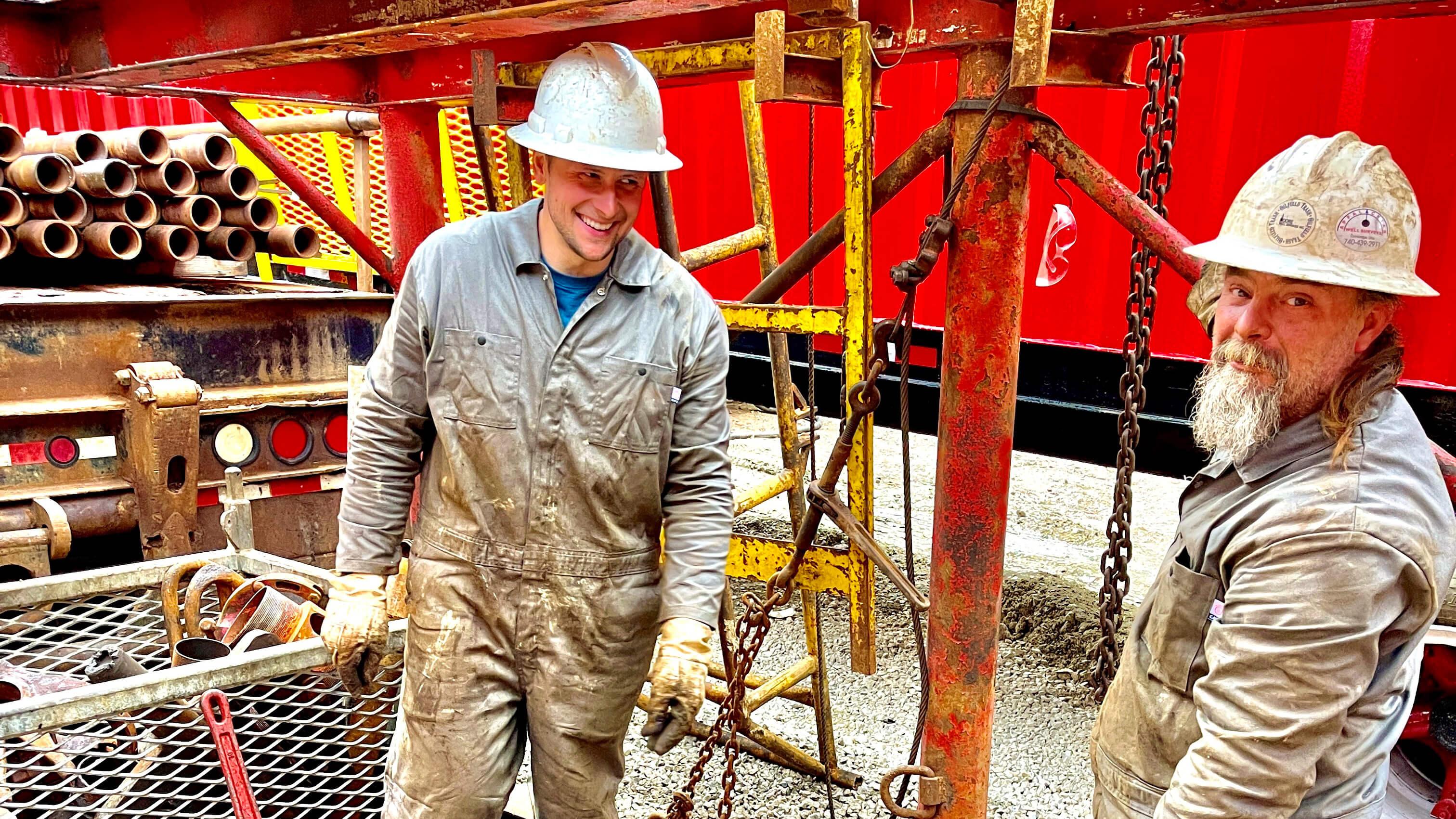 An estimated 3.5 million orphaned wells are scattered across America, many releasing methane and toxic chemicals like benzene into nearby communities.
Photo: The Well Done Foundation
An estimated 3.5 million orphaned wells are scattered across America, many releasing methane and toxic chemicals like benzene into nearby communities.
Photo: The Well Done FoundationFrom humble beginnings funded by car washes and bake sales, the foundation now partners with corporations and federal agencies. Their 15-person team operates across 11 states, with expansions planned for South America and the Middle East.
Curtis's wife, Stacey, who took that midnight phone call in 2019, now serves as Chief of Staff, managing regulatory compliance across multiple states and leading an all-women's team of field technicians. To date, they've plugged 60 wells, preventing over 1.5 million metric tons of CO2 equivalent emissions.
The foundation's most gratifying project unfolded in Cleveland, Ohio, at Our Lady of Angels, a former monastery turned retirement home. For years, elderly residents complained of gas smells. The gas company dismissed them as “crazy”, insisting no gas lines existed. Then, during a construction project, workers discovered an undocumented orphaned well. The Well Done Foundation stepped in, manoeuvring equipment between buildings to plug the well safely.
“It was probably one of our most memorable and satisfying projects because of the impact.” The residents were vindicated. The community got their building. The courtyard was transformed from hazardous site to gathering place. Stories like this play out nationwide, yet challenges persist.
We're just in the get-stuff-done business, right? Our approach is to pick up our tools and go out to work every day and hopefully leave things better than we found them.
“I tell people all the time that I have a well-plugging problem,” Curtis jokes. “We would love to plug more, but it’s largely limited by just the amount of funds that we receive.”
Our plugging protagonist champions a prevention-first approach, as he explains with a simple analogy: “If your bathtub is flooding and it's leaking water all over the floor, it's great to go get a towel to help clean it up - but wouldn't you wanna turn the water off first?”
As the foundation grows, Curtis's focus shifts toward building something bigger than himself. What drives him isn't personal recognition but human impact. “The people that are impacted by the work that we're doing, the appreciation of the landowners, the collaboration with the regulatory agencies, that for me is really the driver,” he explains. “It's been an honour of a lifetime to be able to do this work.”
He hopes his team will continue the work long after he's gone, creating systems and partnerships that outlast any individual founder. The foundation's playful “Plug, Baby, Plug” campaign captures their pragmatic spirit, demonstrating that fixing problems matters more than fixing blame.
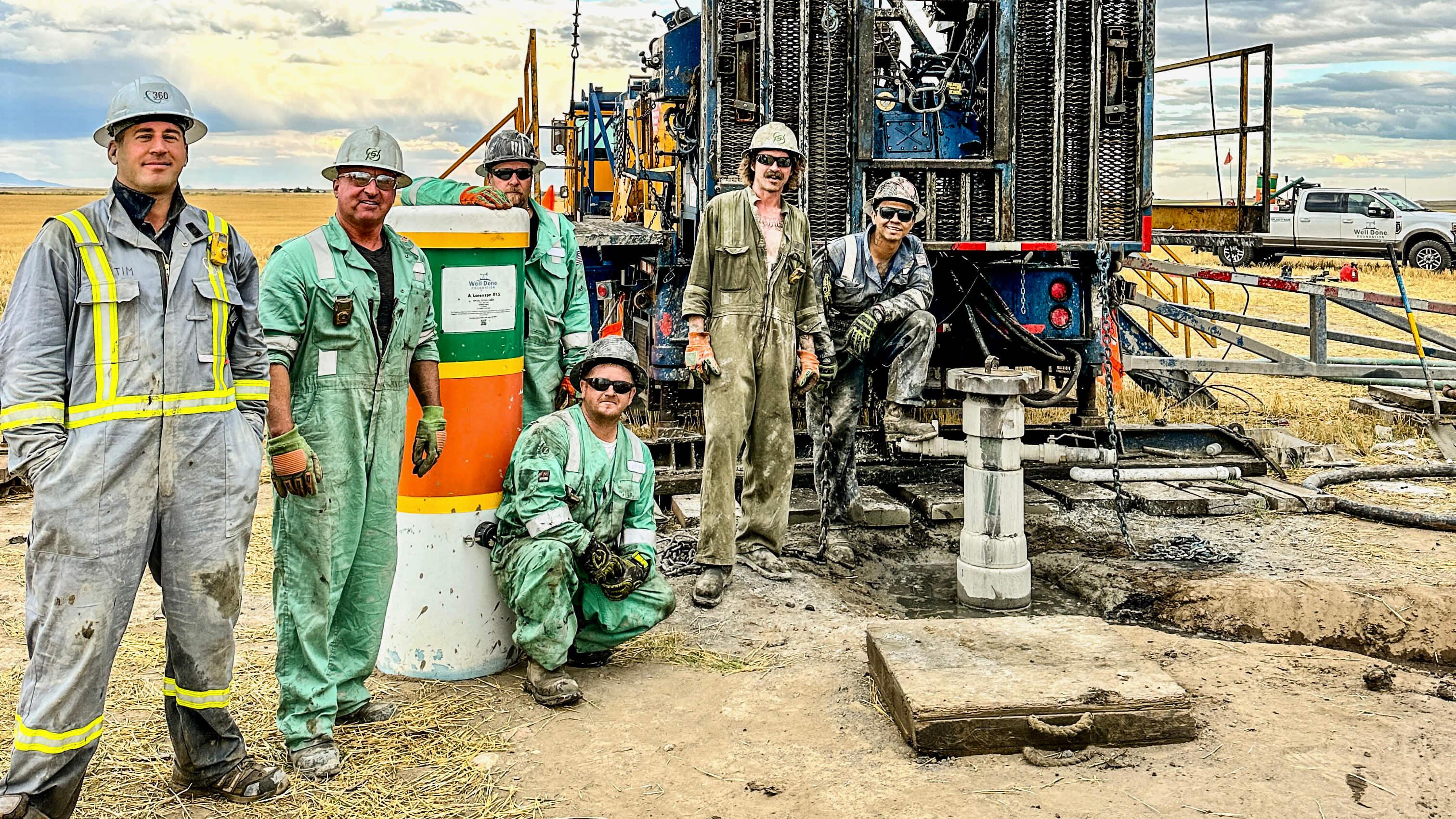 To date, the Well Done Foundation has plugged 60 wells, preventing over 1.5 million metric tons of CO2 equivalent emissions.
Photo: The Well Done Foundation
To date, the Well Done Foundation has plugged 60 wells, preventing over 1.5 million metric tons of CO2 equivalent emissions.
Photo: The Well Done FoundationHis message remains characteristically humble: “If some knucklehead from Montana can be inspired to take action, you know then anybody can make a difference.” But for this man, the real measure of success goes deeper. “It's not about the wells, The Well Done Foundation plugs. It's the people who hopefully we inspire.”
Curtis Shuck trusted his conscience over convenience that night on the Montana freeway. Six years later, 60 plugged wells prove that childhood lessons about cleaning up messes aren't just moral imperatives: they're climate solutions.
Most Popular
The Climate Tribe delivers stories about Biodiversity and Conservation, Circular Economy, Food and Water , and how they intersect with climate.
Subscribe
Get the latest stories inspiring climate action around the globe straight to your inbox.