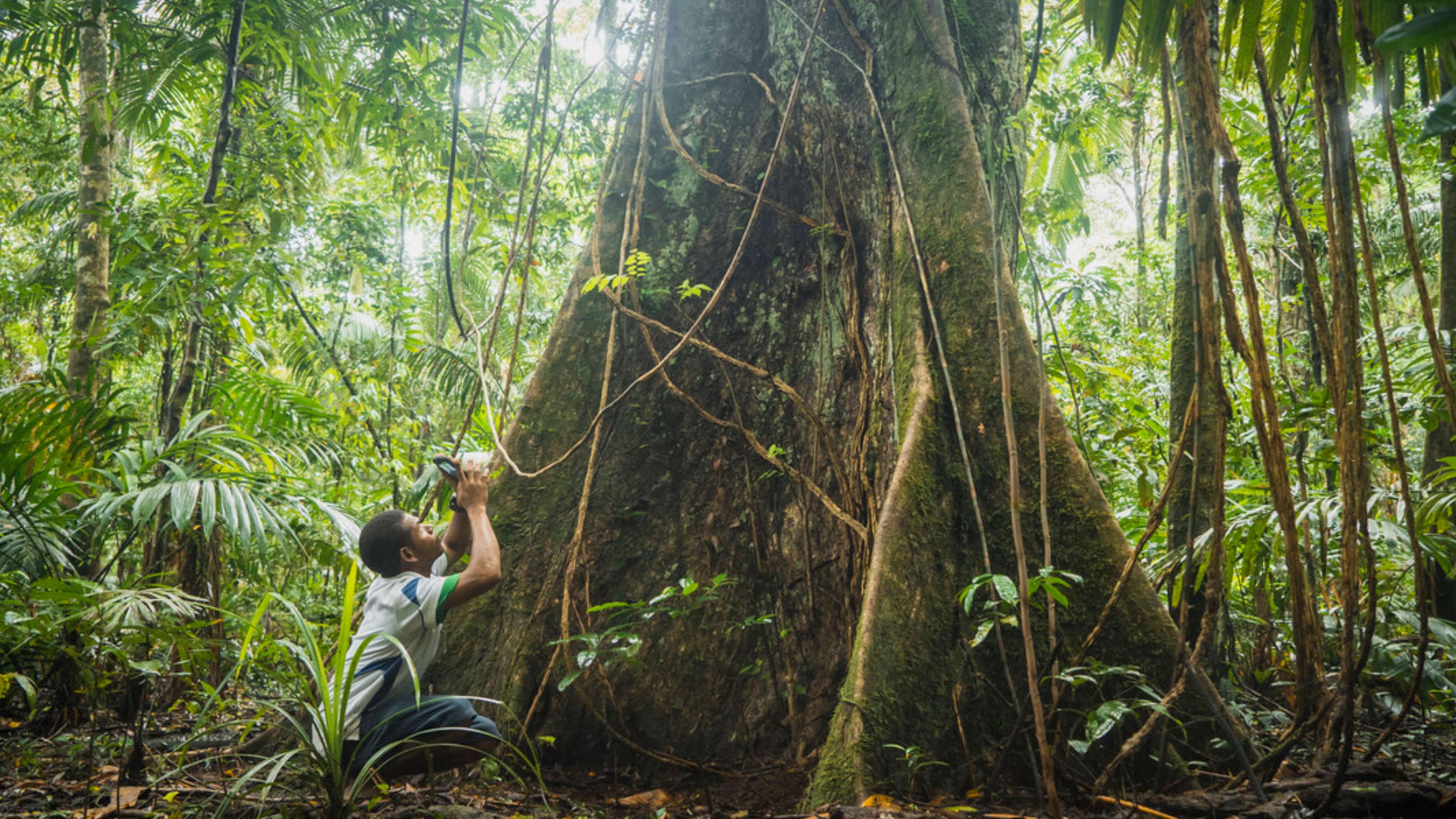
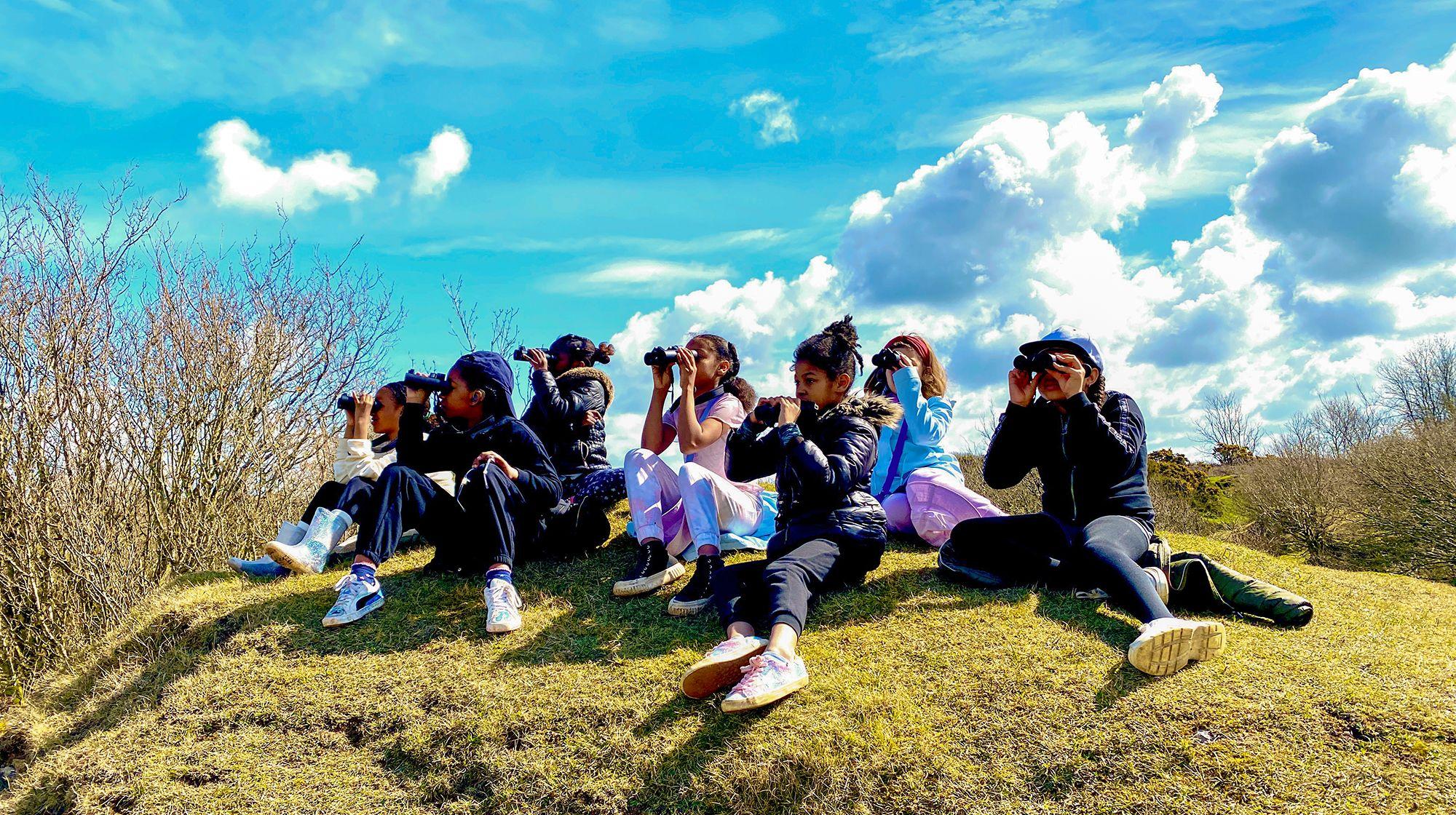
The Blooming Trees of Gujarat’s Forest Keepers
In the dense forests of a Northern Indian state, tribal communities face discrimination, poverty and climate impact. For more than 20 years, Vikalp, a nearby NGO, has been working to build an alternate, just world - with development built on equity, dignity, and gender parity.
 Based in Gujarat, Vikalp has been working to build an alternate, just world - with development built on equity, dignity, and gender parity.
Photo: Vikalp
Based in Gujarat, Vikalp has been working to build an alternate, just world - with development built on equity, dignity, and gender parity.
Photo: Vikalp
In recent years, Himanshu Banker’s annual list of guests to visit has grown to include over 14,000 trees. Mango, lemon, jackfruit, and teak trees rise across the most densely forested region of Gujarat, India.
For Himanshu, a 51-year-old lawyer and NGO director, these saplings represent the decades-long work of VIKALP. A voluntary, UNFCCC-accredited NGO founded in 2002, Vikalp means ‘alternative’ in Gujarati.
VIKALP works to empower the poor, scheduled castes (including Dalits, who are designated “untouchables”) and tribes in India through inclusive, sustainable development and social justice.
“We wanted a nation with equity and dignity. We started with the constitutional rights to get their basic amenities, for education, for health, for food and water,” Himanshu explains.
For Himanshu, his journey to VIKALP began in 2001, after the devastating 2001 earthquake in Bhuj, Gujarat, and the aftermath of the 2002 religious riots in the state. As an ambitious, 23-year-old graduate of law, engineering and literature, he joined forces with fellow visionaries in various fields, united by this dream.
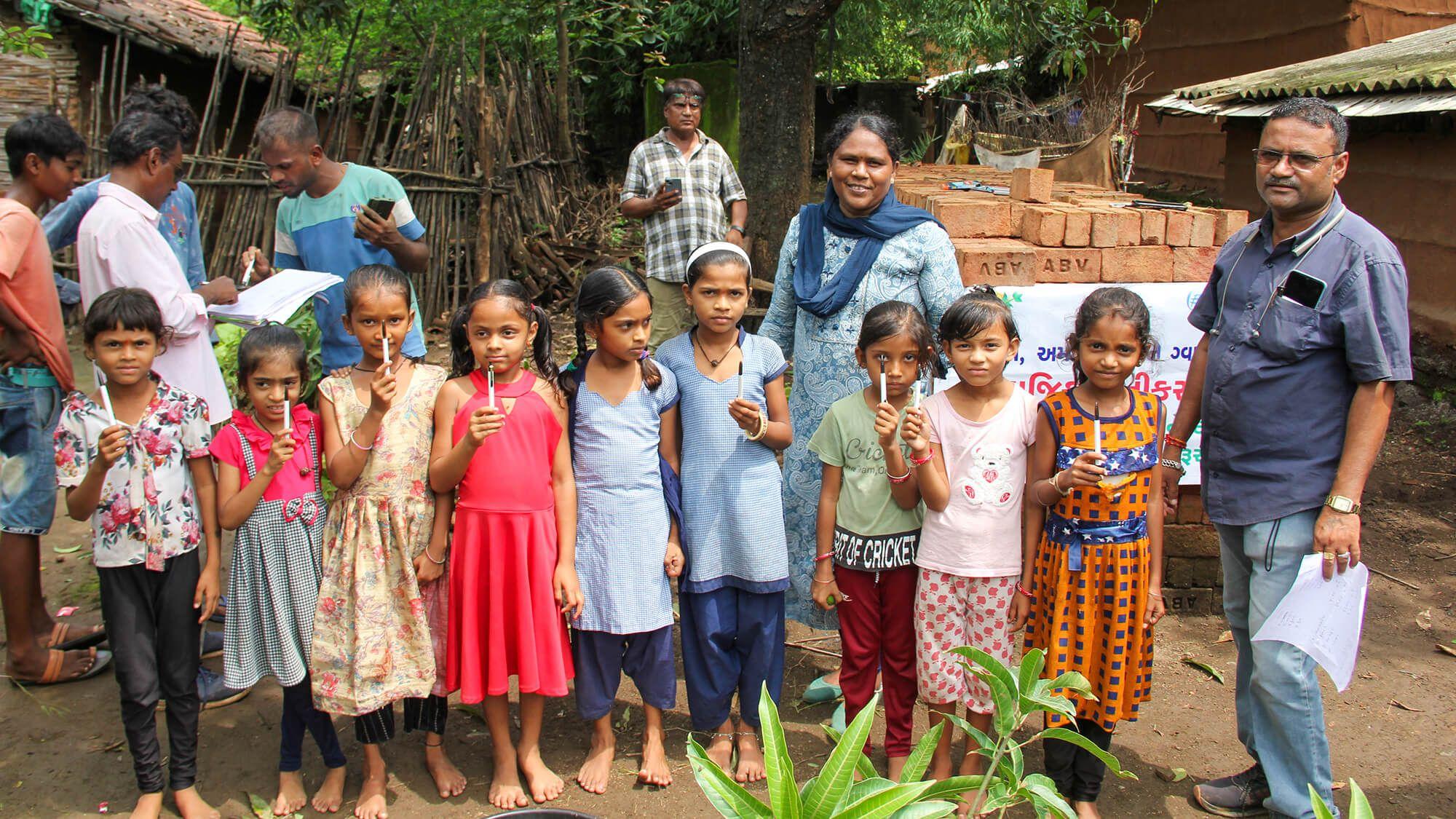 Vikalp works to empower tribal communities of the Dang and Tapi regions of Gujarat. Dang, a lush forested district bursting with biodiversity.
Photo: Vikalp
Vikalp works to empower tribal communities of the Dang and Tapi regions of Gujarat. Dang, a lush forested district bursting with biodiversity.
Photo: Vikalp"We see many people are discriminated against, helpless, not getting proper legal remedies, and many organisations don't equally work for all the communities,” he says, describing the heartbreaking conditions that VIKALP seeks to remedy.
As a child, Himanshu had realised that if his community wanted to live with dignity, the Indian constitution, which guarantees equality and prohibits discrimination, should be followed. “I come from the untouchable community. My father fought for his education to get a job, and he even got a proper job at a bank. But because of the lower caste, they always put him in an area where there are no basic facilities,” Himanshu recalls. “He was the main boss in the office and was not allowed to drink water from the pot.”
Not only did his father overturn that system, but he also gave his son an occupation-based surname to shield him from the same. "I became a lawyer and decided that I will mainly work for the community." Himanshu also practices as a High Court lawyer, sometimes taking on public interest litigation cases as per community needs.
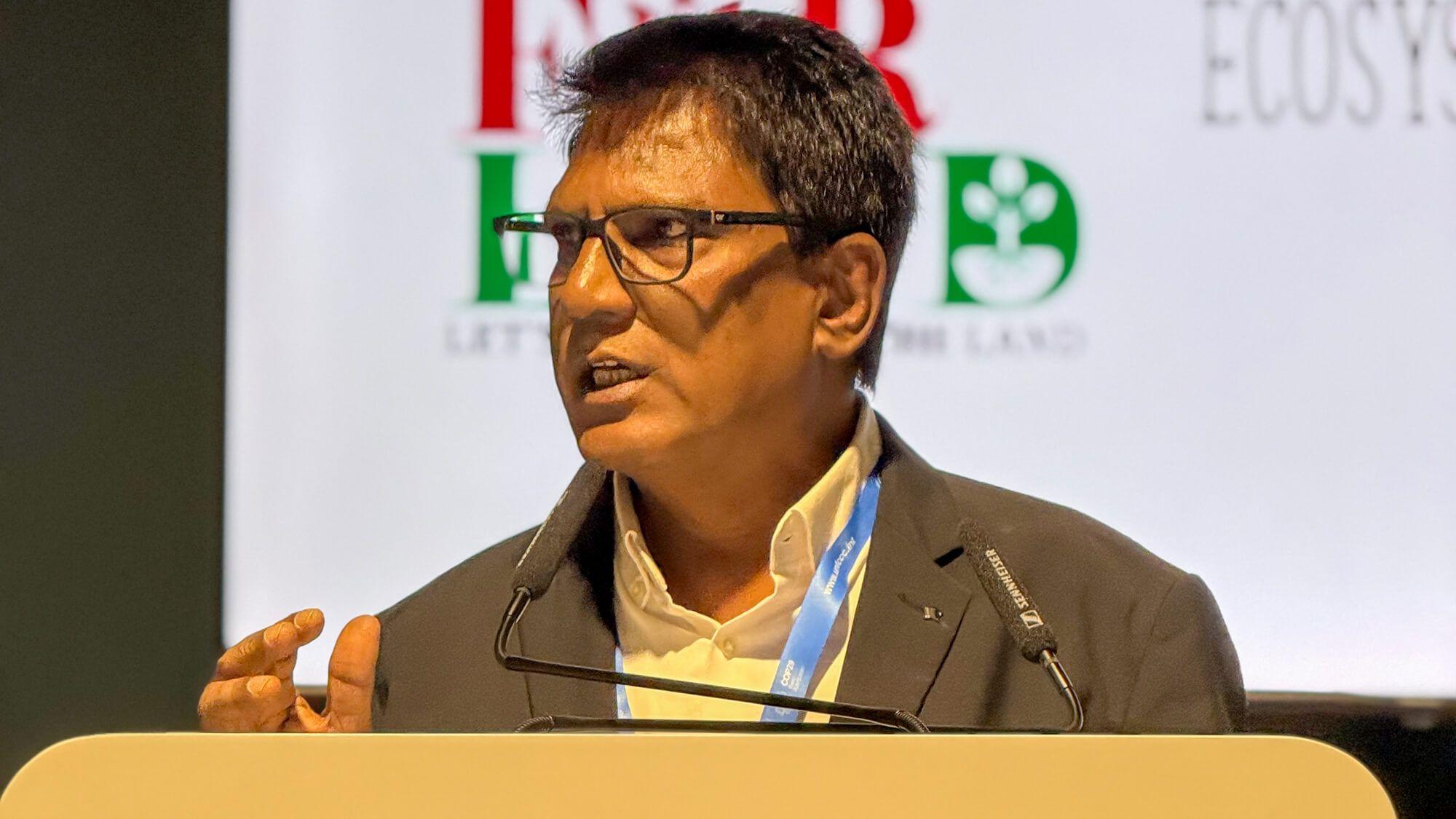 Himanshu Banker, a 51-year-old lawyer and NGO director, co-founded Vikalp in 2002, hoping to create sustainable, equitable communities.
Photo: Vikalp
Himanshu Banker, a 51-year-old lawyer and NGO director, co-founded Vikalp in 2002, hoping to create sustainable, equitable communities.
Photo: VikalpSo began the arduous labour of love for the early Vikalp team (who were also working full-time jobs) to help empower tribal communities of the Dang and Tapi regions of Gujarat. Dang, a lush forested district bursting with biodiversity, is also the home of over 220,000 people, 94% of whom belong to scheduled tribes. These are indigenous tribal communities officially recognised by the government for special protection or benefits due to their distinct culture, geographical isolation and socio-economic disadvantage. “For them, nature is God. They pray to the sun, to the tiger… Collectiveness is their value. And whatever they take from nature, they give to nature, but they are always protectors of nature,” Himanshu says. In fact, according to the Forest Survey of India Report 2003, about 60% of India’s forest cover lies in 187 tribal districts.
Nevertheless, although these communities traditionally have land rights, they didn’t have the legal titles. The 2006 Forest Rights Act then provided a legal framework to recognise their rights, although implementation is a lengthy process, including filing claims and multiple levels of approval. “We decided that we first guide and support to fight for the legal titles of the community, so they have their land in their own name, and then we will support to develop their land.” This remains an ongoing VIKALP initiative with the support and part of the Indigenous Network.
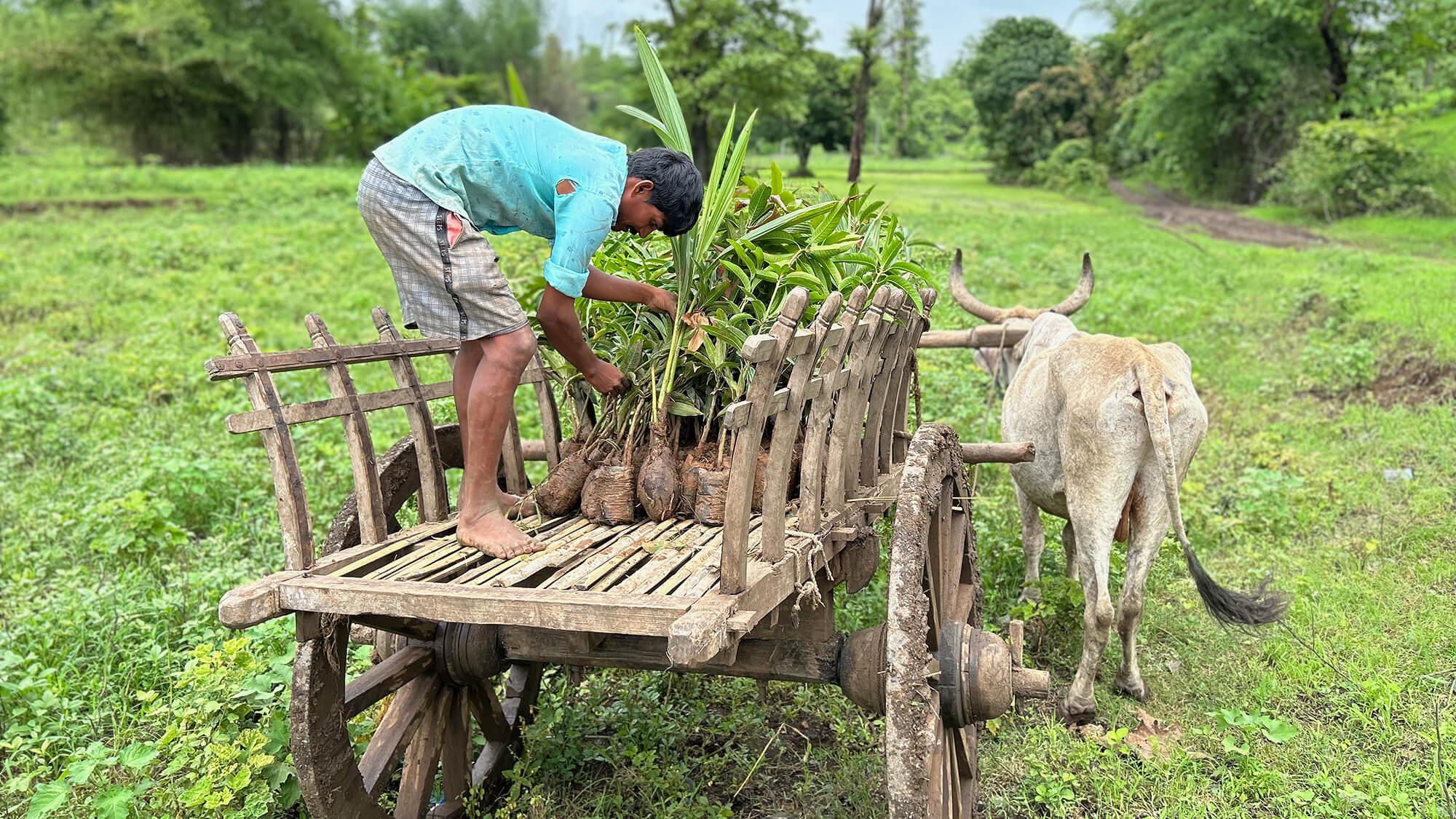
Through government schemes, they helped the communities access borewells, lights and electricity. “Meanwhile, we understand the climate issue is like knocking on the door in 2012.” They started encouraging a shift to organic, regenerative farming practices, and also began planting trees to increase tree cover and resilience.
We have already planted more than 412,000 trees in the last ten years with more than 10,000 families in 150 villages.
They not only provided training on production with indigenous, traditional seeds, use of organic fertilisers, but also de-husking for rice, packaging and marketing. Communities planted both native and fruit trees. “We have already planted more than 412,000 trees in the last ten years with more than 10,000 families in 150 villages,” he says proudly.
Together, those baby trees have also bloomed new worlds into existence, combating malnutrition, providing a healthy environment, and a livelihood for the forest-dwelling communities. They also offer homes to local bird and animal species. VIKALP also aims to restore degraded land using biodiversity sites, which include a Miyawaki forest of 3000 to 4000 trees in a small plot of land, alongside native and fruit trees.
VIKALP also focuses on women's empowerment, providing training on value addition of forest products and equitable business opportunities for women through their Bhoomi Producers’ Initiative, which now has more than 5,000 families as members.
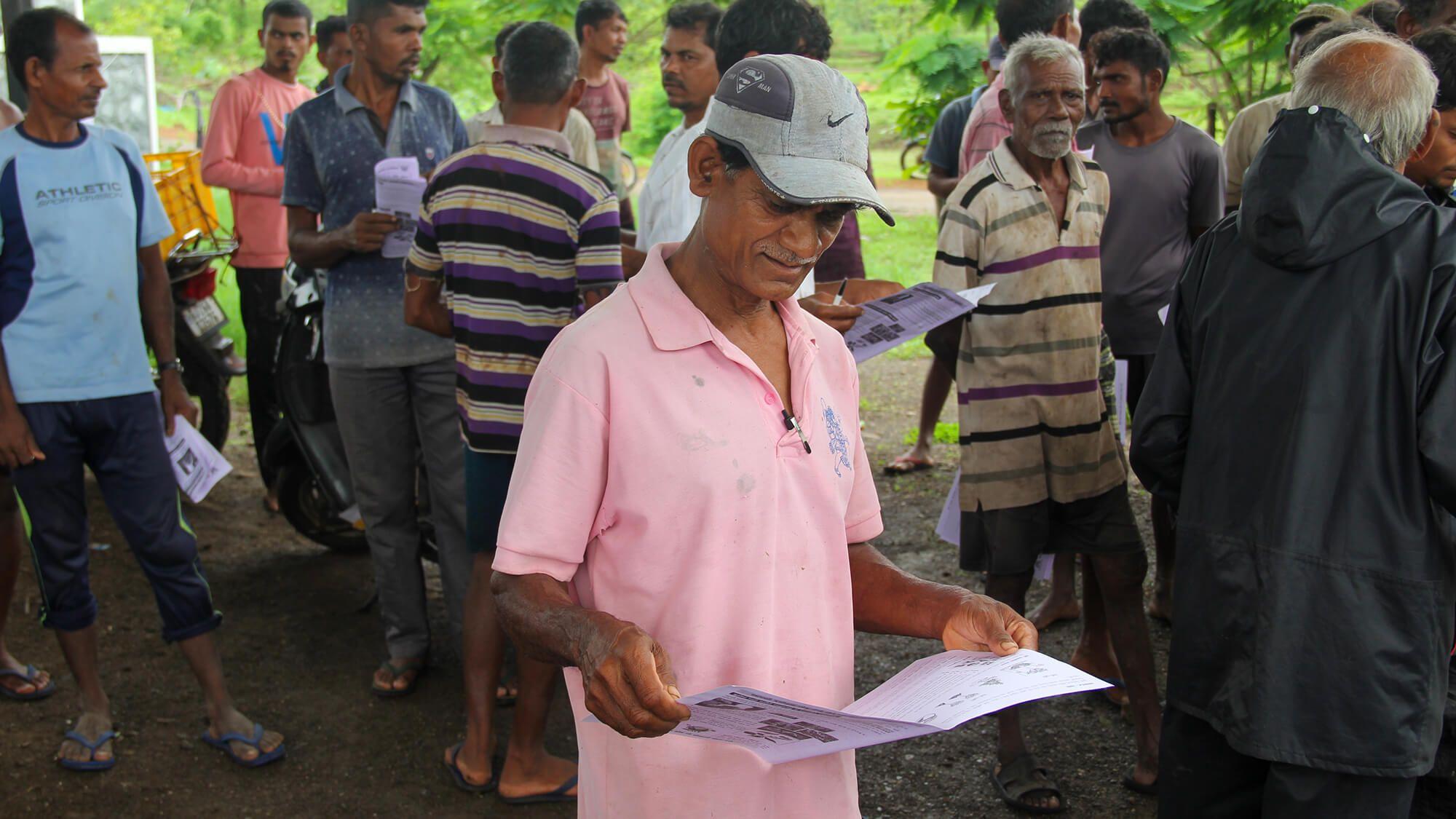 Through government schemes, they helped the communities access borewells, lights and electricity, as well as shift to organic, regenerative farming practices.
Photo: Vikalp
Through government schemes, they helped the communities access borewells, lights and electricity, as well as shift to organic, regenerative farming practices.
Photo: VikalpUnder Vikalp’s criteria, each village should have their own committee, with more than 50% representation of women. “If there is a committee of nine members, at least five members would be women.” They also encourage women to maintain separate bank accounts to support their financial independence.
Nevertheless, the devastating impacts of climate change are rising. "Against nature, we can't do anything." Between March and May 2025, India experienced the highest pre-monsoon rainfall in five years, with Gujarat receiving over 60% more rainfall than normal.
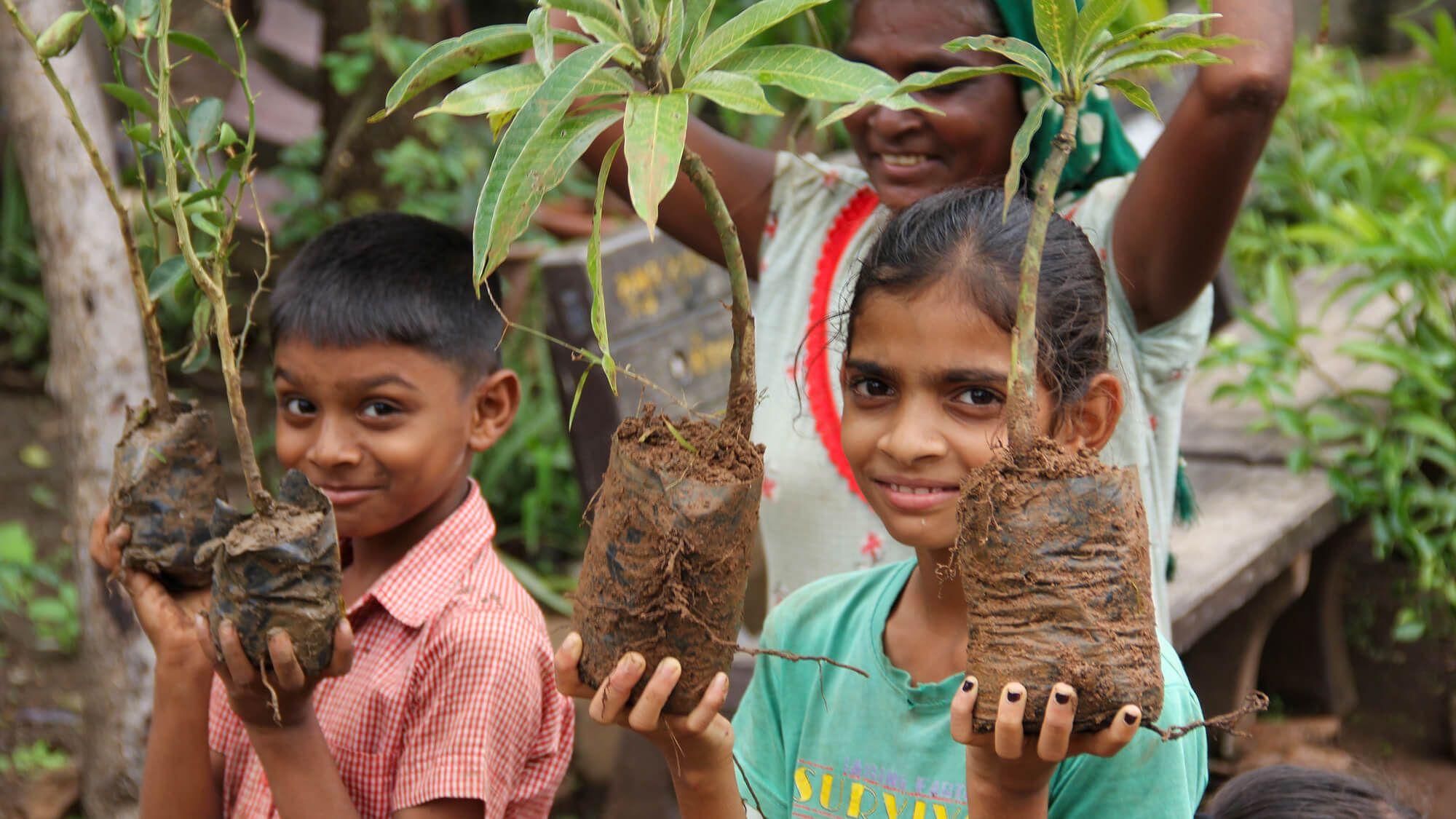 VIKALP also focuses on women's empowerment, providing training and equitable business opportunities for women through their Bhoomi Producers’ Initiative, which now has more than 5,000 families as members.
Photo: Vikalp
VIKALP also focuses on women's empowerment, providing training and equitable business opportunities for women through their Bhoomi Producers’ Initiative, which now has more than 5,000 families as members.
Photo: VikalpThe blistering heat of successive heatwaves in India, exceeding 40 °C, also cuts short their working hours, leaving only early morning and late evening hours feasible for outdoor work. Moreover, political and religious division reverses their impact, and funding remains a challenge.
But Himanshu and VIKALP put their faith in the trees. “Once they start to get the fruit, they [the communities] never think about cutting the trees.”
And each bloom of the mango trees brings with it the sweetness of an empowered community living in harmony with ancestral forests.
Most Popular


The Climate Tribe delivers stories about topics such as biodiversity and conservation, circular economy, food and water , and how they intersect with climate.
Enquire
Do you have a sustainability story that deserves to be told? Are you driving climate action in your community, or do you know someone who is? Let us know about it at [email protected]
Subscribe
Get the latest stories inspiring climate action around the globe straight to your inbox.