Orchestrating a New Climate Awareness
Stephan Crawford, founder of The ClimateMusic Project, believes the path to climate action runs through the heart, not just the head. His San Francisco-based organisation communicates climate science insights through music, moving audiences to both tears and action.
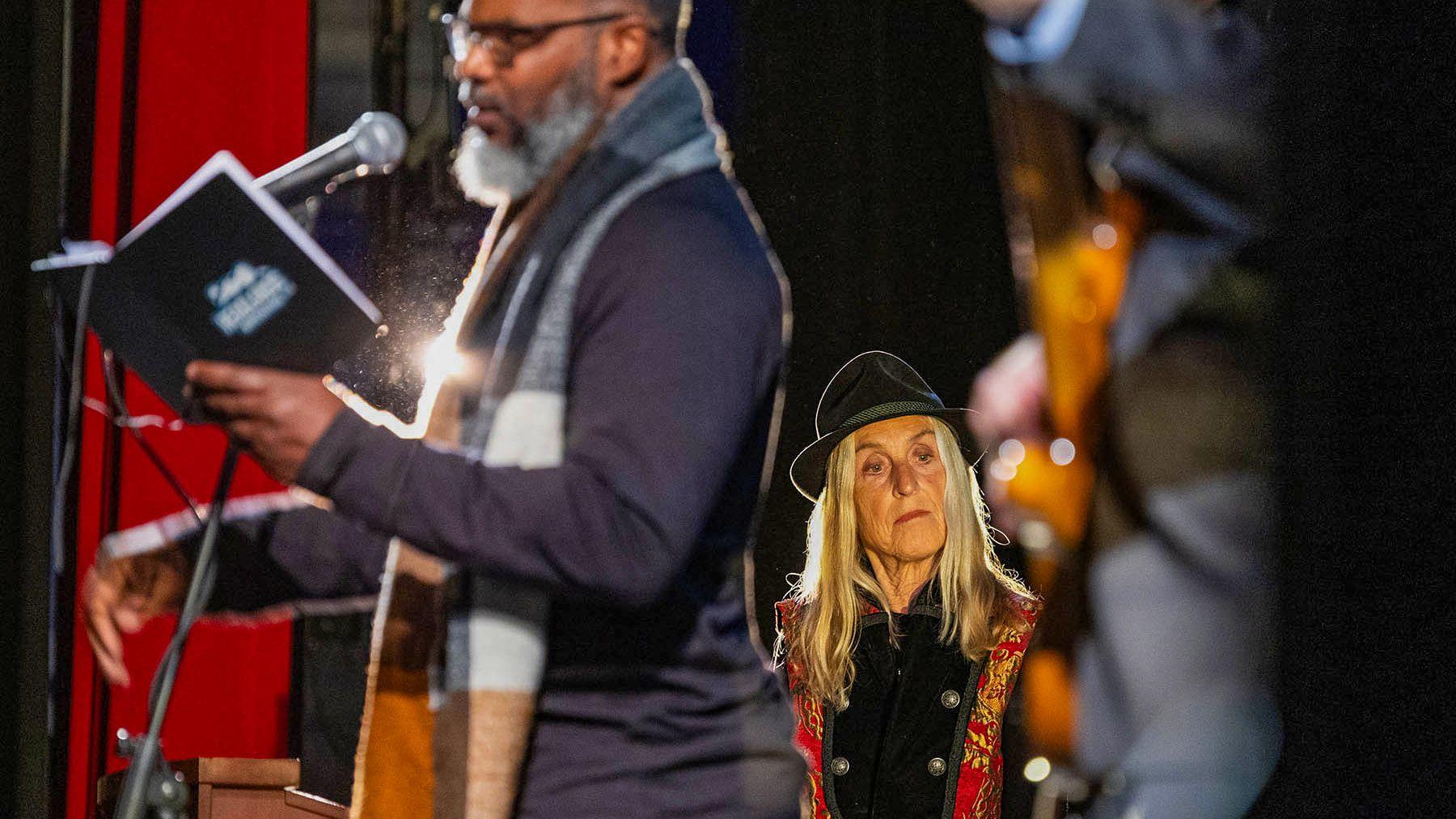 The ClimateMusic Project is bringing climate data to the masses, all through the incredible power of music.
Photo: The ClimateMusic Project
The ClimateMusic Project is bringing climate data to the masses, all through the incredible power of music.
Photo: The ClimateMusic Project

Rain drummed against the windows of the old dance studio in San Francisco. Stephan Crawford found himself leading a flamenco class for which he was completely unprepared - the master guitarist was nowhere to be seen, and twenty dancers waited as he fumbled through rhythms.
Then something extraordinary happened.
“Just for a moment, the thunder and the lightning synced to the movement of the dancers' bodies and the rhythm of the music... it all just came together for a second,” Stephan recalls. “And it was electrifying.”
In that instant, lightning illuminating shadows, thunder arriving on the downbeat, natural forces synchronised with human creativity. It was a moment that hinted at connections yet to be made.
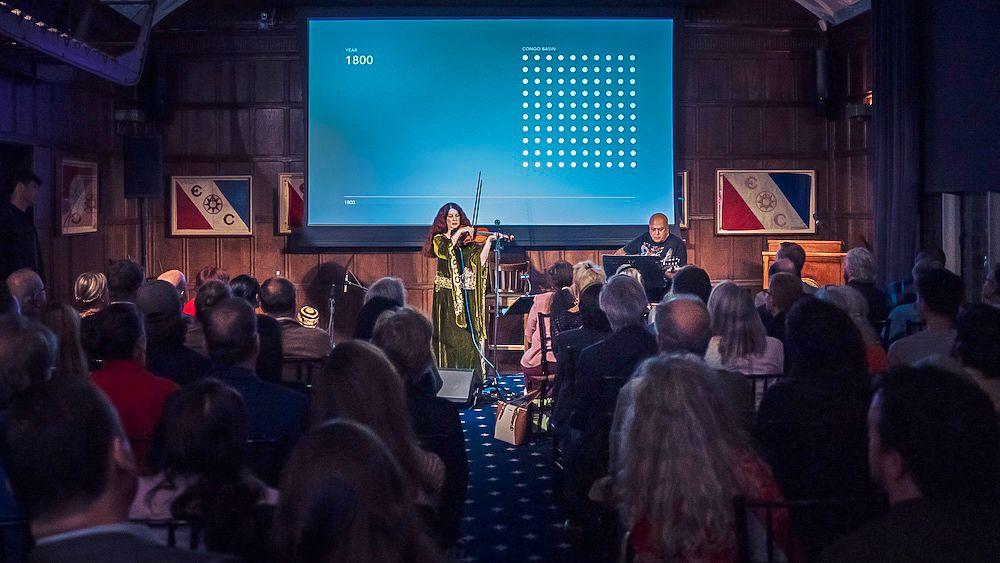 The ClimateMusic project brings together scientists from across the United States, matching them with composers spanning classical to electronic dance. Visual artists then create data visualisations that unfold alongside each composition.
Photo: The ClimateMusic Project
The ClimateMusic project brings together scientists from across the United States, matching them with composers spanning classical to electronic dance. Visual artists then create data visualisations that unfold alongside each composition.
Photo: The ClimateMusic ProjectStephan's path to founding The ClimateMusic Project began long before that stormy evening. Growing up in Southern California, his childhood was shaped by his father's Sunday morning Chopin sessions and sailing amongst offshore islands.
His earliest memories involve sitting beneath his father's piano bench, absorbing the music that filled their home. But it was the ocean that shaped his environmental consciousness. “My family spent a lot of time on the water. Those experiences moulded my interests and what I've done since.”
These twin passions led to environmental activism, from canvassing against nuclear weapons in the 1980s to earning a master's degree in environmental sciences, and a musical evolution from classical piano to flamenco guitar. Eventually, they would converge in an unexpected way.
The ClimateMusic project brings together scientists from leading institutions such as UC Berkeley, Caltech, and Lawrence Berkeley National Laboratory with composers spanning classical to electronic dance. Visual artists create data visualisations that unfold alongside each composition. Each piece begins with a story - human drivers, sea level rise, or climate solutions - then scientists and musicians spend years transforming abstract data into visceral musical experiences.
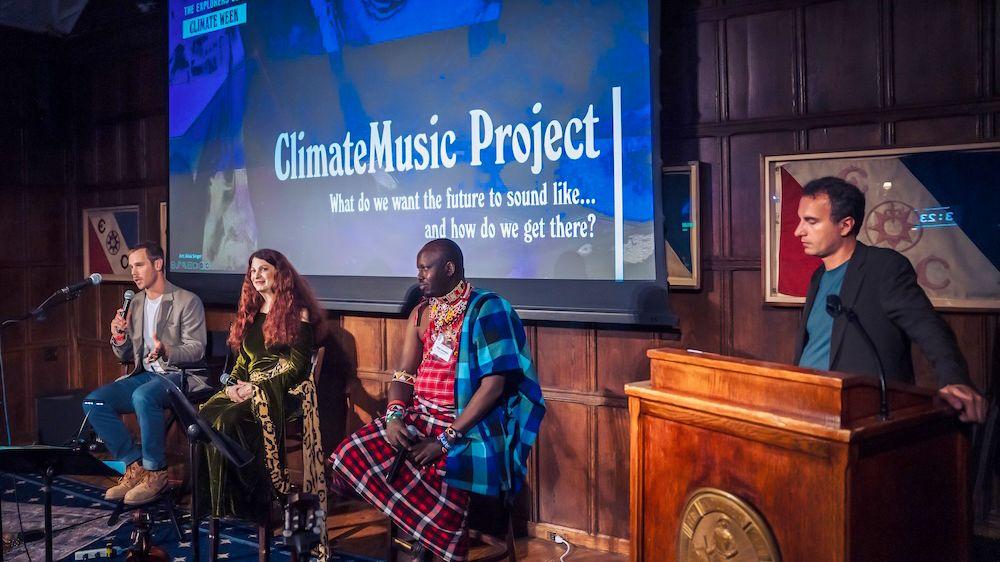 The project offers what traditional climate communication often lacks - accessibility.
Photo: The ClimateMusic Project
The project offers what traditional climate communication often lacks - accessibility.
Photo: The ClimateMusic ProjectStephan's approach intentionally centres on reaching hearts first, then minds. “The music that we perform elicits an emotional impact, opening people up to the possibility of having conversations that maybe they wouldn't have otherwise had,” he explains. This philosophy recognises a simple truth: “We are, at base, emotional creatures. We'd like to think of ourselves as being rational… but emotions play a big part in our decision making.”
The project offers what traditional climate communication often lacks - accessibility. “We offer a very easy entry point to a very difficult topic... as a way to bring people into the conversation who probably would never go to a scientific lecture,” Stephan notes.
The magic happens through “sonification” - transforming climate data into musical elements. This process involves two main techniques: audification, which creates sonic displays of data, and parameter mapping, where data directly controls musical elements in real time. Stephan describes how population data becomes musical density: “As the population grows, the music starts to sound comparatively crowded. As CO2 emissions go up, the pitch starts going both higher and lower.” Audiences literally hear the changing climate.
The project's performances follow a three-part structure designed to maximise impact: a scientist opens by explaining the context, the musical performance follows, and then audiences engage in direct conversation with both musicians and scientists about climate action.
We offer a very easy entry point to a very difficult topic... as a way to bring people into the conversation who probably would never go to a scientific lecture.
This isn't entertainment for entertainment's sake. “We don't exist just to put on interesting concerts. We exist to communicate, inspire and provide resources and channels for people to take reasonable and practical steps in terms of climate action.” Each performance partners with local organisations, helping audience members understand what they can do at home, in their communities, and through civic engagement. Stephan calls this “easy flow through”, while “that emotional churn is still happening.”
The project’s breakthrough moments happened in real time. In 2015, during their first performance in Oakland's planetarium, a woman stood up after hearing their 30-minute piece - a composition that begins with beautiful music and gradually becomes "shredded" over time to represent climate degradation - and shared a revelation.
“She said for the first time, it took an issue that had been very abstract and dropped it into the arc of her family's own history,” Stephan recalls. “We actually got kicked out because we went way beyond the closing time. People really wanted to talk about it."
The ClimateMusic Project has grown into a global phenomenon, staging over 80 events, reaching audiences in at least 30 countries and partnering with institutions such as the World Bank, European Union, World Economic Forum, and National Academy of Sciences.
Stephan, selected as a 2024 EC50 global changemaker by The Explorers Club, remains focused on expanding the project’s reach. “We could be reaching millions of people,” he says, describing dreams of interactive music and educational applications that teach science through composition.
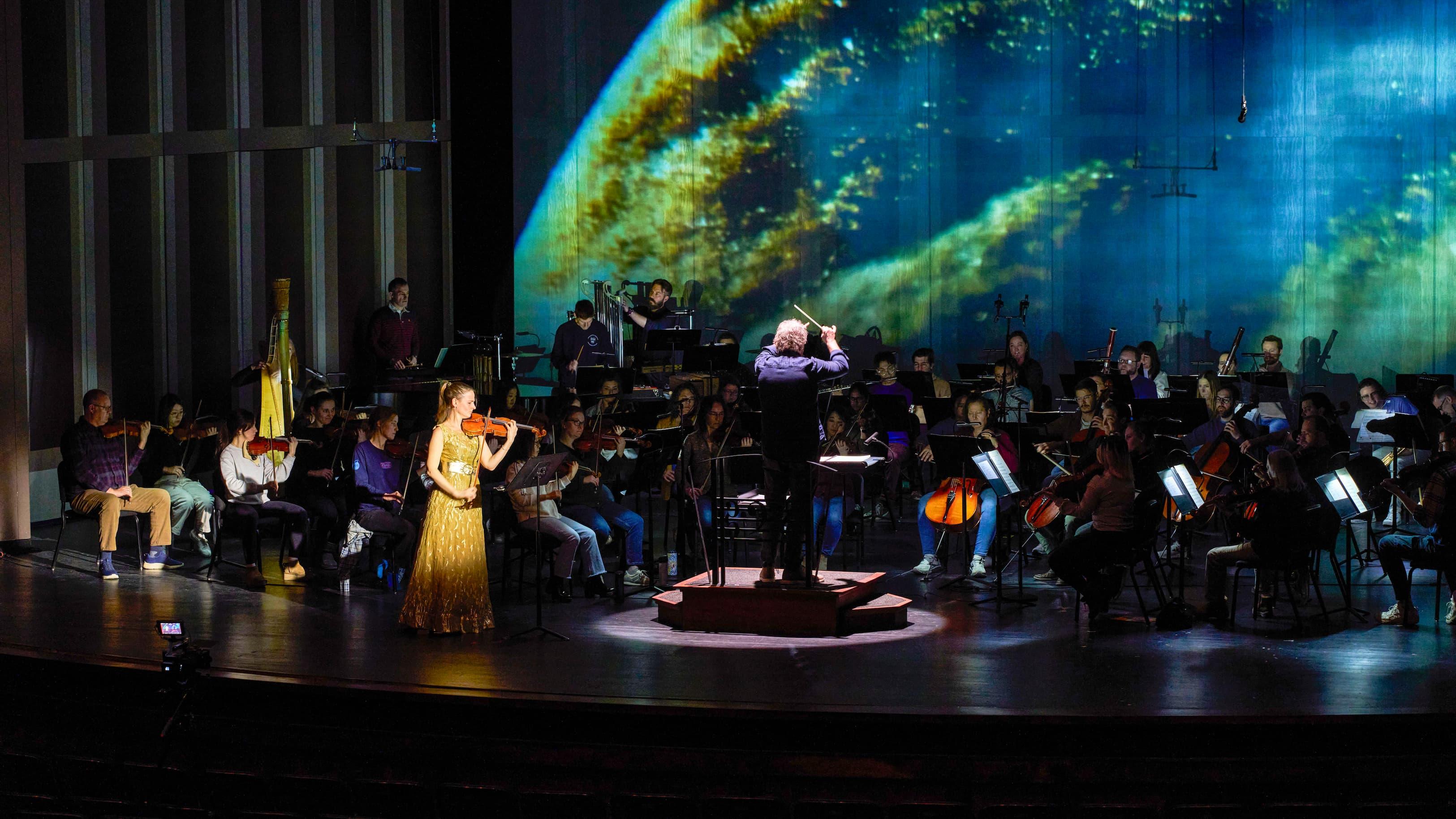 The ClimateMusic Project has grown into a global phenomenon, staging over 80 events, reaching audiences in at least 30 countries and partnering with institutions such as the World Bank, European Union, World Economic Forum, and National Academy of Sciences.
Photo: The ClimateMusic Project
The ClimateMusic Project has grown into a global phenomenon, staging over 80 events, reaching audiences in at least 30 countries and partnering with institutions such as the World Bank, European Union, World Economic Forum, and National Academy of Sciences.
Photo: The ClimateMusic ProjectDespite this global success, the project faces a familiar challenge for nonprofits. Operating primarily through volunteers, each composition takes about a year to complete. “We would love to accelerate our work,” he admits. “But we need additional resources.”
Yet Crawford finds reason for hope in a fundamental shift: now most people accept climate change as real (according to The Yale Program on Climate Communication), and the challenge is moving from awareness to action.
“I think just in realising how many very bright people are working on this issue,” he reflects, “we have the solutions. What's holding us back is simply the collective will to act through the political process.”
When asked what he most wants audiences to take away, his answer is immediate: “Action on climate change is urgent, but it's only urgent because we can still do something about it. We have the tools, we have the knowledge, we just have to do it.”
In a world where climate science can feel overwhelming and abstract, Stephan Crawford has discovered something remarkable: sometimes the most powerful way to understand our changing planet is simply to listen.
Most Popular



The Climate Tribe delivers stories about topics such as biodiversity and conservation, circular economy, food and water , and how they intersect with climate.
Enquire
Do you have a sustainability story that deserves to be told? Are you driving climate action in your community, or do you know someone who is? Let us know about it at [email protected]
Subscribe
Get the latest stories inspiring climate action around the globe straight to your inbox.