Going Bananas with Fashion
29Acacia aims to be home to fashion’s sustainable superhero – banana fabric. The startup transforms agricultural waste from the world’s most consumed fruit into a sustainable textile alternative, while helping raise banana farmers in India out of poverty.
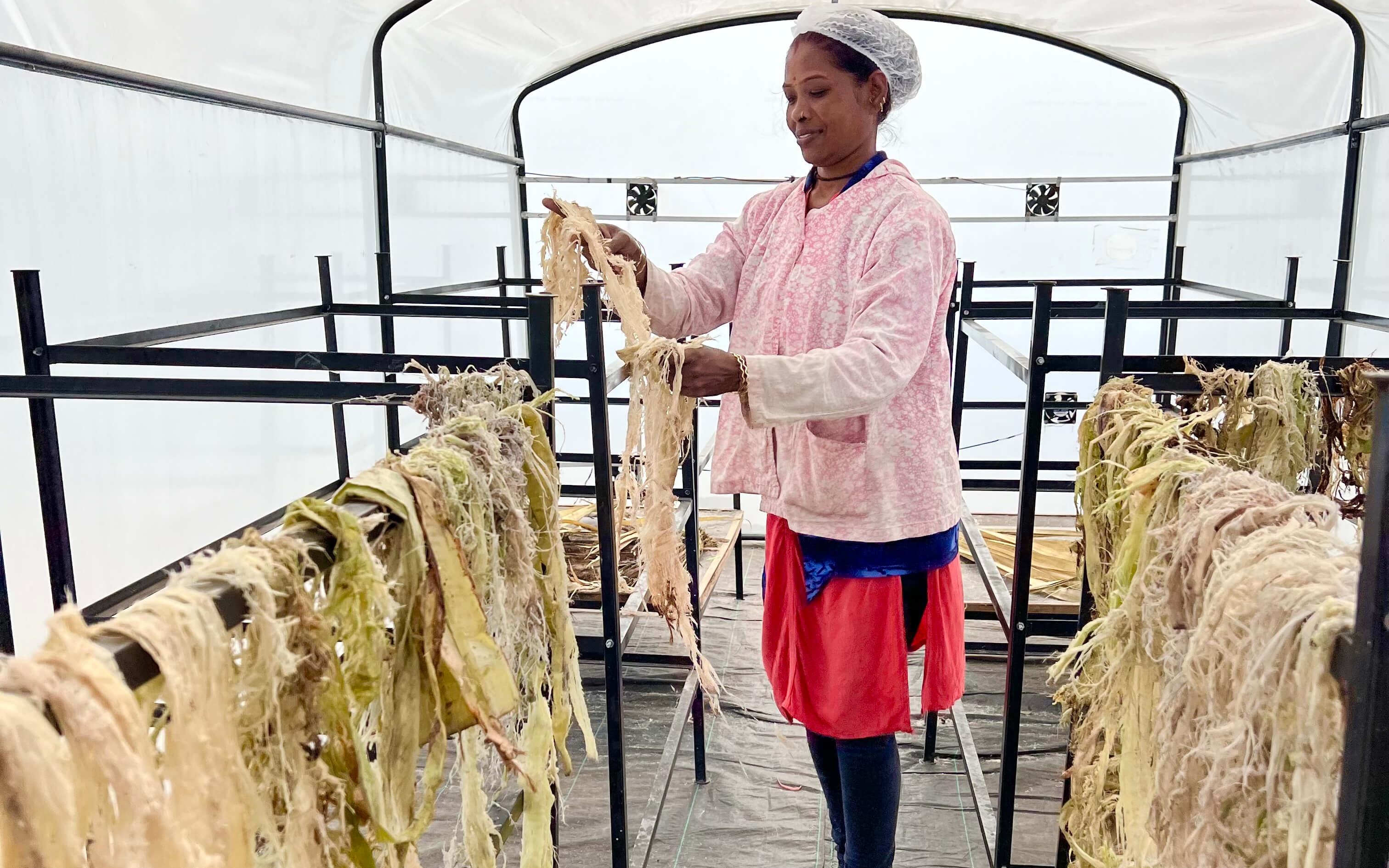 29Acacia is a startup that makes high-performance, low-impact textile alternatives to cotton and viscose from agricultural banana waste.
Photo: 29Acacia
29Acacia is a startup that makes high-performance, low-impact textile alternatives to cotton and viscose from agricultural banana waste.
Photo: 29Acacia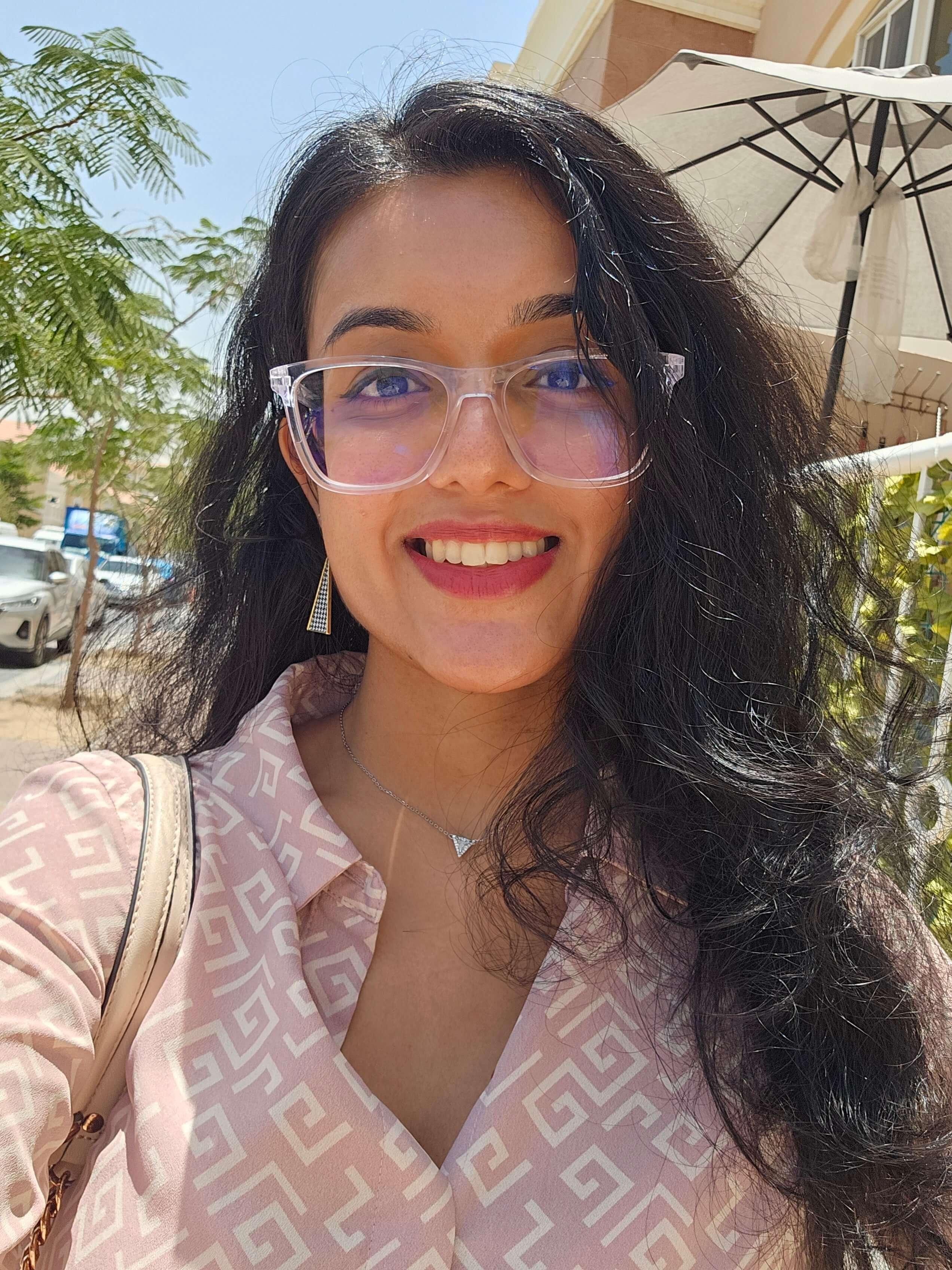
On the star-studded red carpet of the Fashion Awards in 2024, Sarah Angold was busy defying convention. The statement piece of her black evening gown was a giant blue bow cinched at her waist, made of banana fabric.
“I've loved fashion since I was like two years old and first told my mum that I was never going to wear the outfit she picked out again,” Sarah says with a laugh. The globally renowned designer’s work has reimagined the worlds within fashion – whether through her signature geometric, ‘sci-fi chic’ jewellery, RFID-enabled accessories or movement-response sculptures.
“The idea of newness, variety and expression through fashion is historical. It comes from thousands of years ago,” says Sarah.
However, this time, she was showing that the next generation of fashion - ethical, eco-friendly textiles that empower our self-expression without leaving a dent on the planet - belongs everywhere. “We've got to find a way to create new narratives that make a difference.”
She explains, “Organic cotton's the current industry go-to for supposedly sustainable fabrics, but we have one-tenth of the carbon footprint of that in our fibre and one-hundredth of the water usage.” 29Acacia’s fabric is three times more durable than cotton, while also being biodegradable - enabling this remarkable textile to sit in a sweet spot for designers. It’s long-wearing and sturdy, but doesn’t fill up a landfill at the end of its lifecycle.
Sarah is the CEO and co-founder of 29Acacia, a startup that makes high-performance, low-impact textile alternatives to cotton and viscose from agricultural banana waste. Named after the address of Bananaman, a British cartoon about a schoolboy who turns into the eponymous adult superhero when he eats a banana, 29Acacia aims to help save the fashion world with the power of the world’s most consumed fruit.
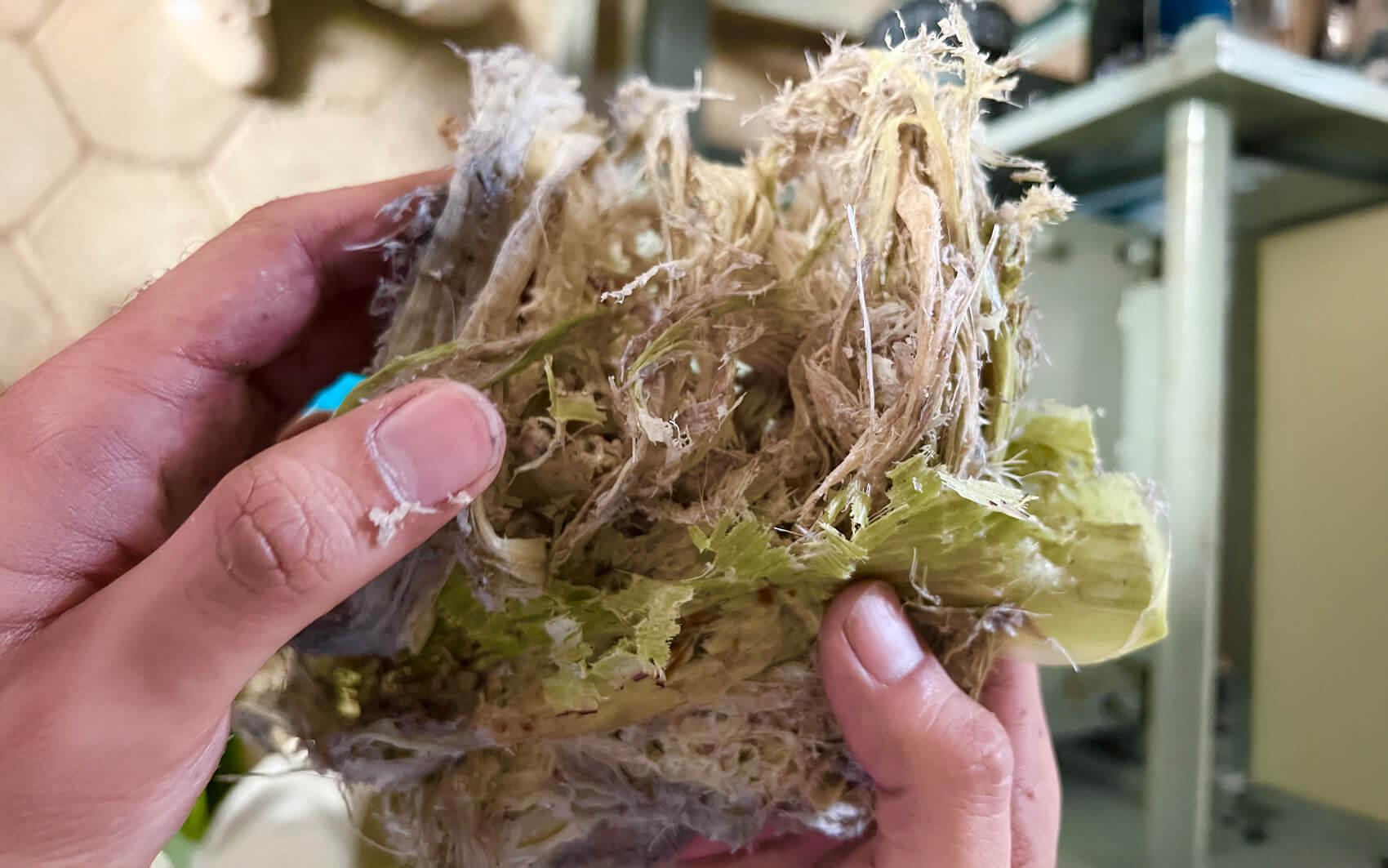 29Acacia aims to help save the fashion world with the power of the world’s most consumed fruit.
Photo: 29Acacia
29Acacia aims to help save the fashion world with the power of the world’s most consumed fruit.
Photo: 29AcaciaBack in the 1980s, when Bananaman was a household name, Sarah already had an inkling that something was very wrong. At just six years old, she had made an artwork titled ‘Our World is Dying’. “It was a drawing of the world, and it looked like a weird crystal ball, but it was covered in rubbish.”
“Then, it was about litter,” recalls Sarah. “If I put my litter in the bin, then everything's okay because then it magically goes to ‘litter place’. Of course, we know now that ‘litter place’ is a massive pile of litter somewhere we can’t see it.”
It was decades later that she saw it – landfills of discarded fashion that are so large, they can sometimes be spotted from space. “It's mind-blowing. You’re like, ‘What’s that moving on top of the pile? Is it a bird? Oh no, it’s humans. Humans picking through, trying to collect value.”
Fashion is currently one of the most polluting industries on the planet, responsible for over 8% of global emissions, 14% of global plastic pollution and 20% of global clean water pollution. During a career break for maternity, she had to confront it. “It's a cliche, but once we have children, I'm thinking to myself, ‘Will they be proud of what I'm doing?’
We need to encourage as much behaviour change as possible with new inspiring narratives that aren't about guilt. We can still have new clothes and beautiful things and amazing, exciting innovations and exciting technology. None of those things has to go away.
As a designer, she put her problem-solving skills to the task. Banana farms generate over 114 million metric tons of agricultural waste every year, as the trees only bear fruit once in their lifetime. “You grow a banana tree, you chop off the fruit, you chop down the tree, and you burn it.”
Founded in 2023, 29Acacia buys the waste from banana farmers, extracts the fibre from the centre of the tree trunk and processes it to make a soft fibre that can replace cotton in the supply chain. “This softening is very important because where the volume exists in the fashion industry, where materials need to be replaced from a sustainability perspective, it's in the ready-to-wear space.”
Over 70% of the fashion industry’s emissions come from upstream activities such as materials production and processing. This is where 29Acacia aims to make an impact by transforming waste that would otherwise be burnt into eco-friendly fabric.
“We need to encourage as much behaviour change as possible with new inspiring narratives that aren't about guilt,” says Sarah. “We can still have new clothes and beautiful things and amazing, exciting innovations and exciting technology. None of those things has to go away.”
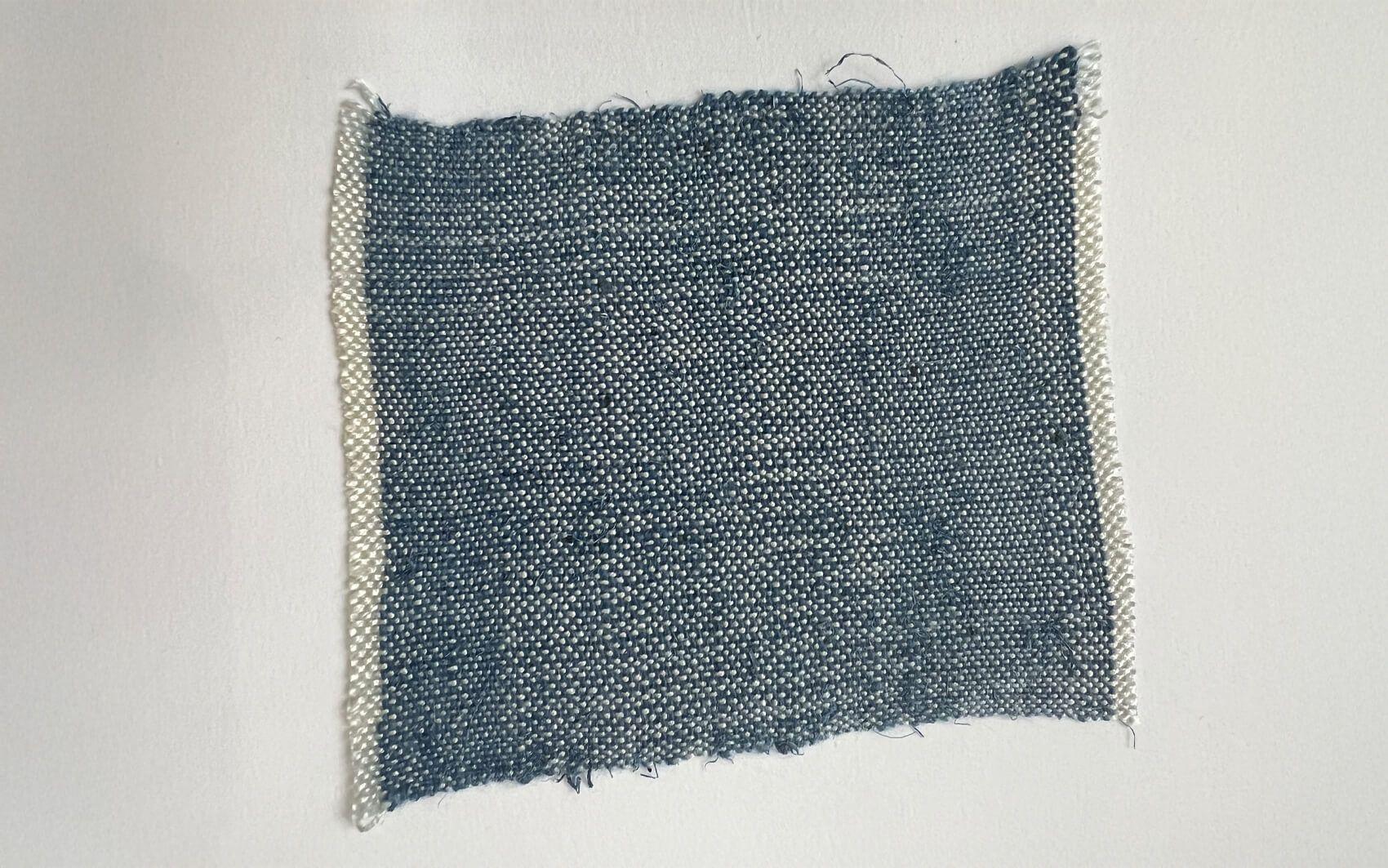 29Acacia buys waste from banana farmers, extracts the fibre from the centre of the tree trunk and processes it to make a soft fibre that can replace cotton in the supply chain.
Photo: 29Acacia
29Acacia buys waste from banana farmers, extracts the fibre from the centre of the tree trunk and processes it to make a soft fibre that can replace cotton in the supply chain.
Photo: 29Acacia29Acacia’s co-founder, Varun Raheja, is an agricultural entrepreneur working to prevent crop loss and waste. In 2023, they had together witnessed the darkest side of her beloved fashion industry – a fast fashion factory. She recalls the heartrending situation of the workers, “They look sick. They're wading through toxic dyes. I don't have a weak disposition, but the noise was so deafening, and the smell was so overpowering that I just knew I was going to vomit.”
As they breathe in toxic dust and handle hazardous industrial chemicals to feed fashion’s next glittering season, textile workers pay the price with their health. They suffer from higher rates of cancers, lung diseases, musculoskeletal disorders and face lasting physical and psychological harm.
The factory owners told them, “The industry demands low prices, and we have to undercut. If we don't undercut, we have no business, and our people will die.” It was a defining moment.
“We might have to pivot a billion times,” says Sarah. “I don't think that he [Varun] and I will ever quit until we achieve what we've set out to achieve.”
By paying low-income farmers for agricultural waste that’s usually discarded, 29Acacia aims to raise 100,000 farmers out of poverty over five years. They also aim to reduce freshwater use by 5 billion litres and save a minimum of 0.3 billion kg of carbon equivalent for the fashion industry by the end of the decade.
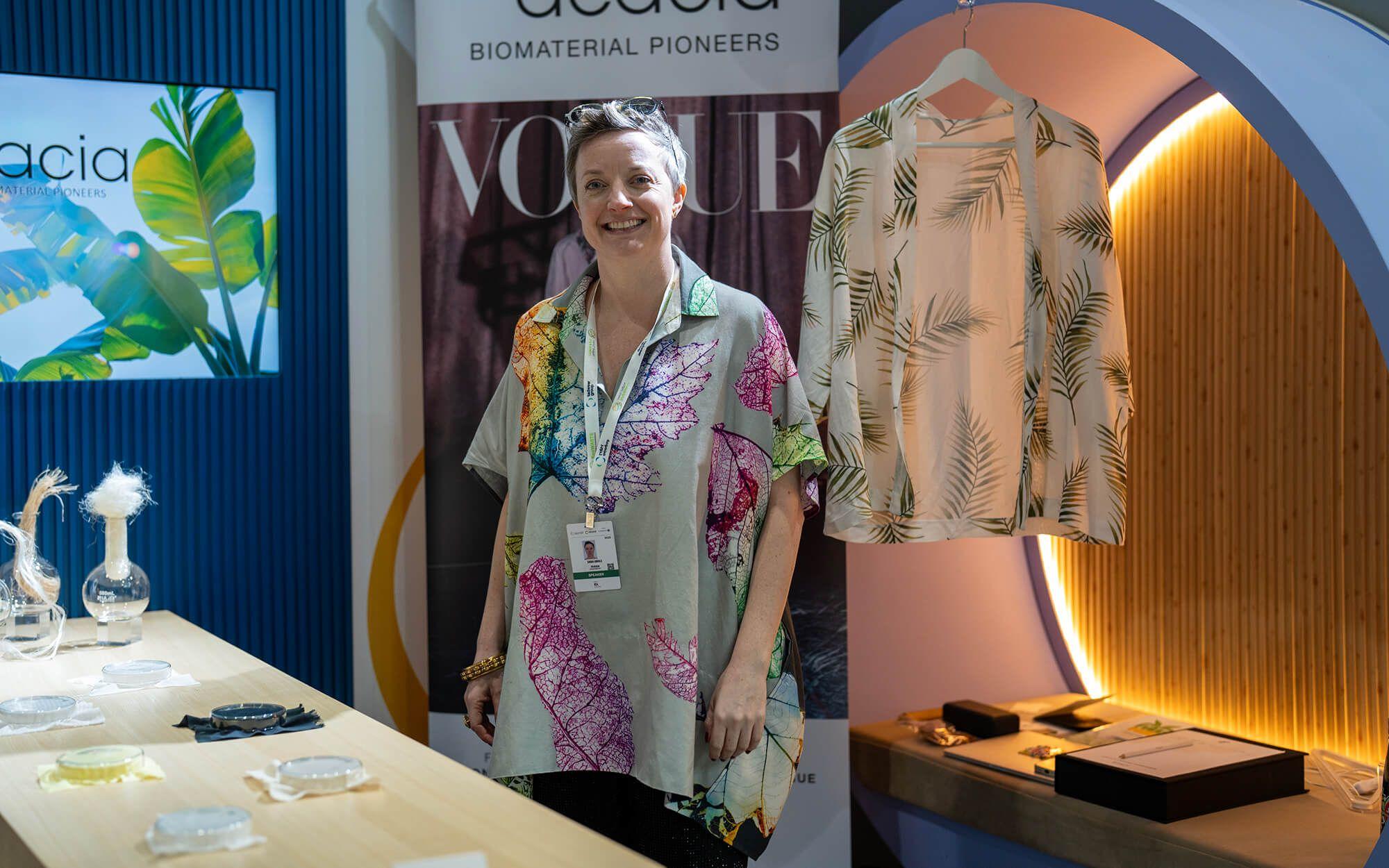 29Acacia co-founder Sarah Angold at Abu Dhabi Sustainability Week in 2025.
Photo: The Climate Tribe
29Acacia co-founder Sarah Angold at Abu Dhabi Sustainability Week in 2025.
Photo: The Climate TribeNevertheless, sustainable fabrics face market barriers. “We're trying to introduce these new ideas into a system that doesn't incentivise them. We’re playing baseball in the swimming pool – we’re on the wrong court.” She explains that as economies are price-driven, regulation to level the playing field on price is necessary.
Governments are stepping up regulation, a major step in the right direction, Sarah explains, but still, consumers need to choose sustainable companies when shopping for clothes. “The answer is you've got to hit people with the bank balance because in order for those companies to become more sustainable, it's got to be worse for them not to be.”
She emphasises the need for new narratives, innovative materials and processes for mitigation to tackle the ecological crises. “All of these have got to come together simultaneously, and hopefully they come together at a point where the human race isn't extinguished yet.
“And I have great hope that that can happen.”
Not all heroes wear capes; some wear bows made of banana fabric.
Most Popular
The Climate Tribe delivers stories about topics such as biodiversity and conservation, circular economy, food and water , and how they intersect with climate.
Enquire
Do you have a sustainability story that deserves to be told? Are you driving climate action in your community, or do you know someone who is? Let us know about it at [email protected]
Subscribe
Get the latest stories inspiring climate action around the globe straight to your inbox.