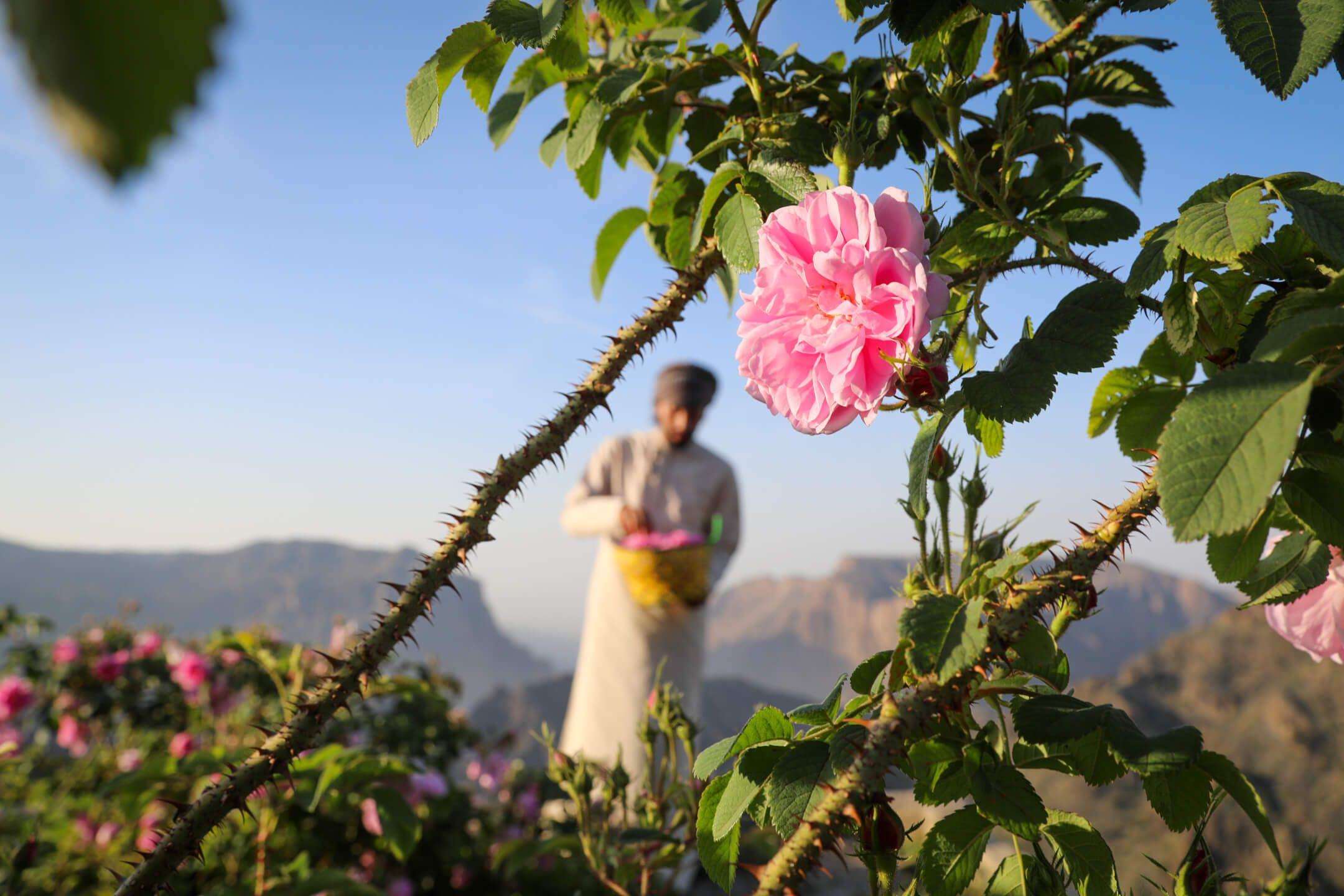
 An Omani farmer harvests Damask roses from the terraced groves of Jebel Akhdar, where they are grown using traditional methods.
Photographer: Kelly Eide
An Omani farmer harvests Damask roses from the terraced groves of Jebel Akhdar, where they are grown using traditional methods.
Photographer: Kelly EideFrom late March to mid-May, the terraced slopes of Jebel Akhdar in Oman’s Hajar mountains are carpeted in fragrant, pink Damask roses.
They bloom there thanks to ancient irrigation techniques, known as ‘aflaj’, which bring up water from underground to feed around 5,000 rosebushes across 10 acres.
It’s a short season but one that is built around the rhythms of mountain life. Farmers rise early to pick the roses at their most fragrant, before the day’s heat descends.
For some 100 small-scale Omani farmers, these delicate flowers are their livelihood. Using traditional methods passed down through generations, the flowers’ petals are dried and the liquid distilled to produce rose oil and the famous Omani rose water, for use in medicine, cooking and cosmetics.
And no part of the flower is wasted. Even the used petals are added to fertiliser to ensure the flowers will bloom, year after year.
It’s a centuries-old system that feels strikingly modern: a model of sustainable farming and circularity that is supporting the local economy - without taking more from the land than it gives back.
This photograph comes from The Climate Tribe Studio, and was taken during a trip to Jebel Akhdar to experience and capture the beauty of Damask rose season. Our colleague came back with stories of hiking down to the rose terraces, taking in the intoxicating scent of the rose bushes, and visiting the smoky distillery famed for producing smoky rose water. Her top tip: put a little spritz in your coffee cup.
Most Popular

The Climate Tribe delivers stories about Biodiversity and Conservation, Circular Economy, Food and Water , and how they intersect with climate.
Subscribe
Get the latest stories inspiring climate action around the globe straight to your inbox.