Kazakhstan’s Golden Steppe: Where the Wild Things Return
Vera Voronova, chair of Kazakhstan's Altyn Dala Conservation Initiative, is orchestrating one of the world's most ambitious rewilding projects: bringing back species that vanished from the Golden Steppe over a century ago.
 Kazakhstan's Altyn Dala Conservation Initiative is bringing back species that vanished from the Golden Steppe over a century ago.
Photographer: Jon Juarez
Kazakhstan's Altyn Dala Conservation Initiative is bringing back species that vanished from the Golden Steppe over a century ago.
Photographer: Jon Juarez
The Czech aircraft descended above the vast Kazakh Golden Steppe, carrying seven passengers who hadn't touched this ancient land for nearly a century.
At a forgotten airstrip 300 kilometres from civilisation, 200 people had gathered to witness history. As the plane touched down, Vera Voronova felt tears streaming down her face.
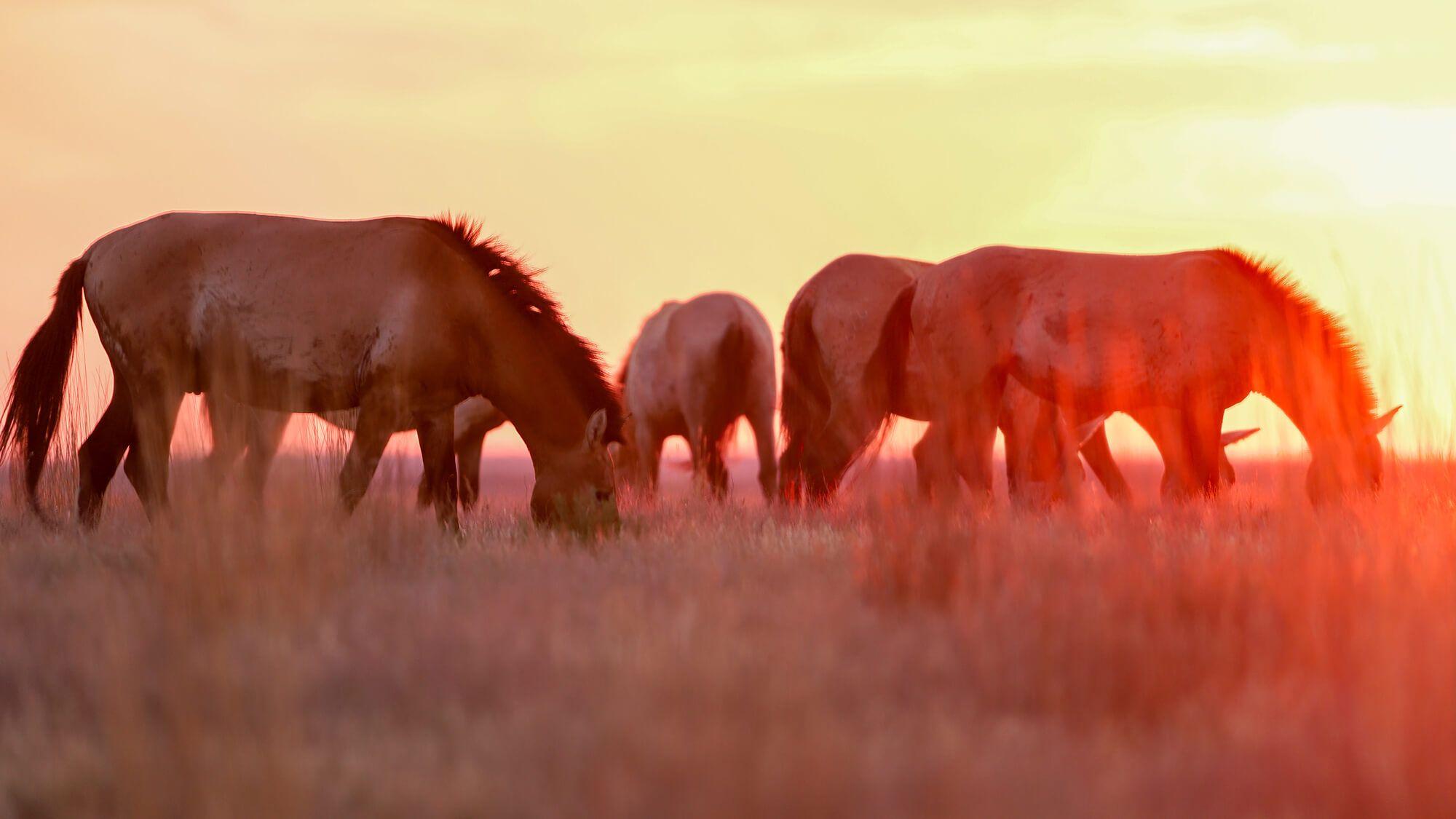
“Can you imagine this first group of seven horses,” she recalls of that historic day in 2024. “It has been nearly 10 years of being prepared for this moment…it was a very touching moment, I think for many of us.” Those seven Przewalski's horses - the last truly wild horses on Earth - were returning home to Central Kazakhstan after a 100-year absence.
For Vera, this moment represented far more than a conservation milestone. It was the latest chapter in a deeply personal mission to safeguard the steppe landscape that shaped her from childhood.
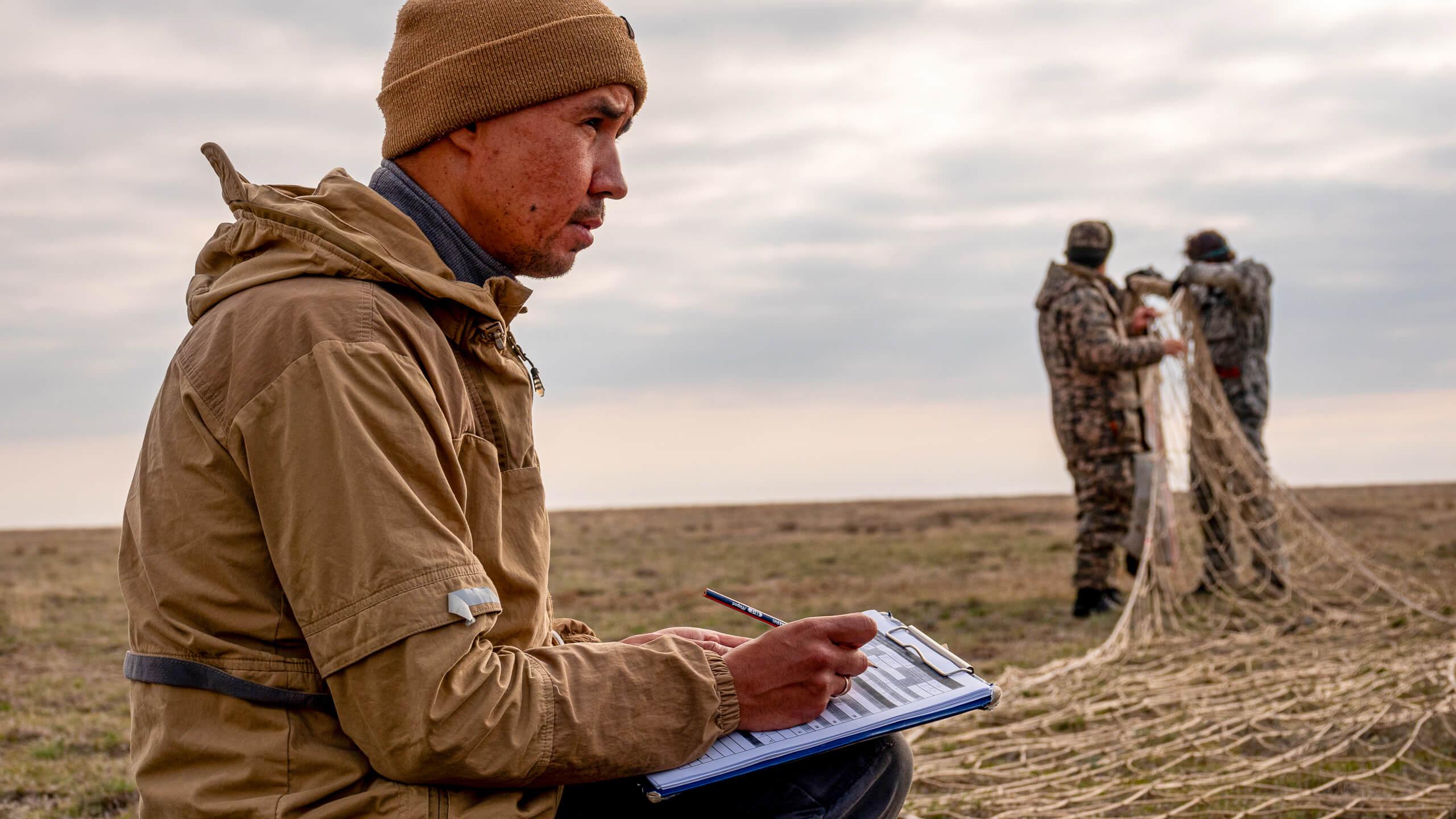 Albert Salemgareyev at work collaring saiga antelope. From over a million individuals in the mid-20th century, saiga antelope numbers had crashed to just 40,000 by 2005.
Photographer: Abduaziz Madyarov
Albert Salemgareyev at work collaring saiga antelope. From over a million individuals in the mid-20th century, saiga antelope numbers had crashed to just 40,000 by 2005.
Photographer: Abduaziz MadyarovGrowing up in Central Kazakhstan, Vera was surrounded by the golden grasslands that would become her life's work. Weekend trips with her nature-loving father were spent mushroom collecting and fishing, sparking her fascination with the outdoors. Her mother’s encouragement to study ecology would prove to be a decision that changed not just Vera's life, but the fate of an entire ecosystem.
“I really love to be in the open landscape where you see everything, and then you're comfortable,” Vera explains, describing her deep connection to the steppe. Here, endless grasslands stretch to every horizon, filled with the wormwood’s herbal scent and the constant song of larks. You can drive for days without seeing a single road or power line - just golden feather grass rippling like an ocean in the wind.
Everything changed during a summer project studying bird mortality from power line electrocution. “I've seen so many dead birds and the bones and everything. It was really heartbreaking to see this,” she remembers. “I think this is how my career in conservation has started.”
That summer sparked a lifelong commitment to protecting the creatures of the steppe. By the early 2000s, the region's most iconic species - the saiga antelope - was sliding towards extinction. These ancient nomadic animals, with their distinctive inflated noses, had roamed these grasslands for millennia. From over a million individuals in the mid-20th century, their numbers had crashed to just 40,000 by 2005, a staggering 90% decline driven by relentless poaching for the traditional medicine trade.
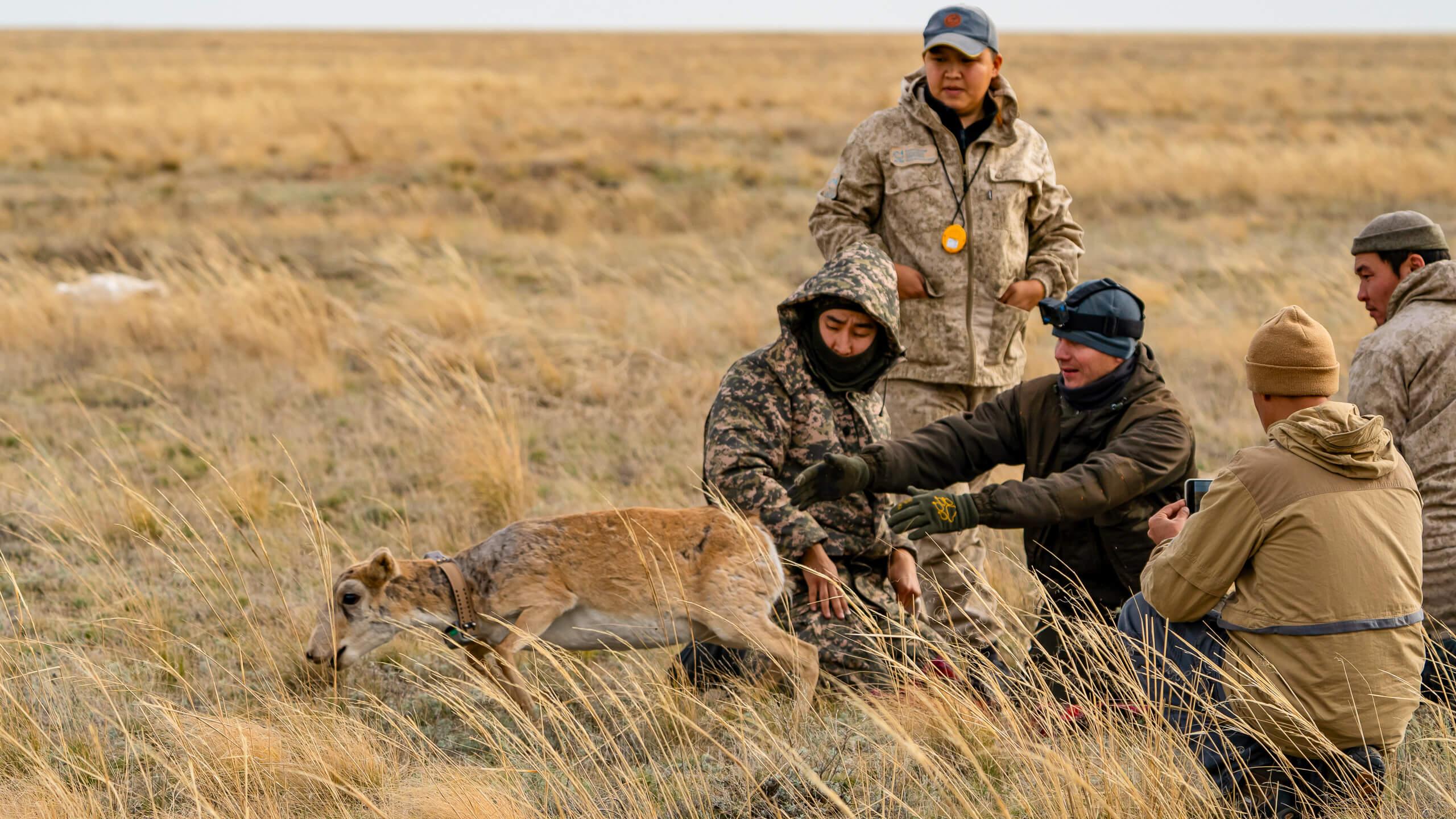 A saiga antelope receives a GPS collar.
Photographer: Abduaziz Madyarov
A saiga antelope receives a GPS collar.
Photographer: Abduaziz MadyarovIn 2004, the Kazakh government issued an urgent call for action, sparking the establishment of the Altyn Dala Conservation Initiative - an ambitious partnership between local organisation ACBK (where Vera now serves as executive director), the Royal Society for the Protection of Birds, Fauna & Flora, and Frankfurt Zoological Society.
“Collaboration,” Vera notes, is key. “Biodiversity conservation is such complex work, and it's not possible to do anything in isolation.”
This alliance exemplifies how different stakeholders contribute unique strengths: the Government of Kazakhstan provides crucial commitments and policy decisions, while NGOs contribute scientific data, technical knowledge, and field expertise. Together, they create a comprehensive approach that neither could achieve alone.
Collaboration is key. Biodiversity conservation is such complex work, and it's not possible to do anything in isolation.
The scale of their mission is breathtaking: protecting and restoring 750,000 square kilometres of steppe ecosystem - an area representing 41% of Kazakhstan's territory. “The area is huge and complex. It's difficult to understand how to prioritise your sources,” Vera acknowledges.
Altyn Dala’s approach combines cutting-edge science with boots-on-the-ground conservation: satellite telemetry to track saiga movements, ranger patrols focused on key calving and rutting areas, anti-trafficking operations working with customs and border services, and even specially trained sniffer dogs to detect smuggled saiga horns. The Government of Kazakhstan (with the support of partners) established over 5 million hectares of protected areas, based on data showing where the animals concentrate during critical periods.
But the real thunder returning to the steppe comes from their ambitious reintroduction programmes. The Kulan Project involved relocating wild Asiatic donkeys - absent from Central Kazakhstan for nearly a century - from overpopulated southern reserves. The challenge meant transporting these powerful animals 2,000 kilometres overland in a gruelling 50-hour journey that many experts deemed impossible. The kulan not only survived but have since produced their first foals in the wild.
 GPS tagging of a Steppe Eagle chick. Altyn Dale’s mission is to protect and restore 750,000 square kilometres of steppe ecosystem - an area representing 41% of Kazakhstan's territory.
Photographer: Bakhtiyar Taikenov
GPS tagging of a Steppe Eagle chick. Altyn Dale’s mission is to protect and restore 750,000 square kilometres of steppe ecosystem - an area representing 41% of Kazakhstan's territory.
Photographer: Bakhtiyar TaikenovThe wild horse reintroduction represented an even greater logistical feat. Vera spent years securing legal protection for the Przewalski's horses. This allows Altyn Dala partnership to establish cooperation with the Prague Zoo, who coordinate the complex international transport. Now these magnificent animals roam free again, their hoofbeats echoing across grasslands where they hadn't been heard for generations.
“My soul is very much engaged with the steppe eagle,” Vera says of another species central to their work. Around eighty-five per cent of the global steppe eagle population nests in Kazakhstan, making the country crucial for the species' survival.
Community engagement has proved just as crucial as the scientific work. “If you want to start to do some initiative with local communities, you need to build trust first,” Vera says about building relationships with local communities. “It took us a year before this trust came.” Their Students for Nature programme has been particularly successful - Vera herself came through a similar student initiative, and six current staff members followed the same path.
 The Steppe’s saiga population has recovered to over 3.9 million individuals, a stunning turnaround from the brink of extinction.
Photographer: Daniyar Kaliyev
The Steppe’s saiga population has recovered to over 3.9 million individuals, a stunning turnaround from the brink of extinction.
Photographer: Daniyar KaliyevThe results are remarkable. The Steppe’s saiga population has recovered to over 3.9 million individuals, a stunning turnaround from the brink of extinction. The initiative earned global recognition as an Earthshot Prize finalist out of 2,400 applications worldwide. “We've been working so hard for 20 years in Kazakhstan,” Vera reflects. “I think it was really great to have all those efforts recognised.”
The returning herds don't just restore the ancient rhythms of the steppe - they help combat climate change. These grasslands store carbon as effectively as forests, their deep root systems locking carbon safely underground while the grazing animals enhance soil capacity through their natural movements.
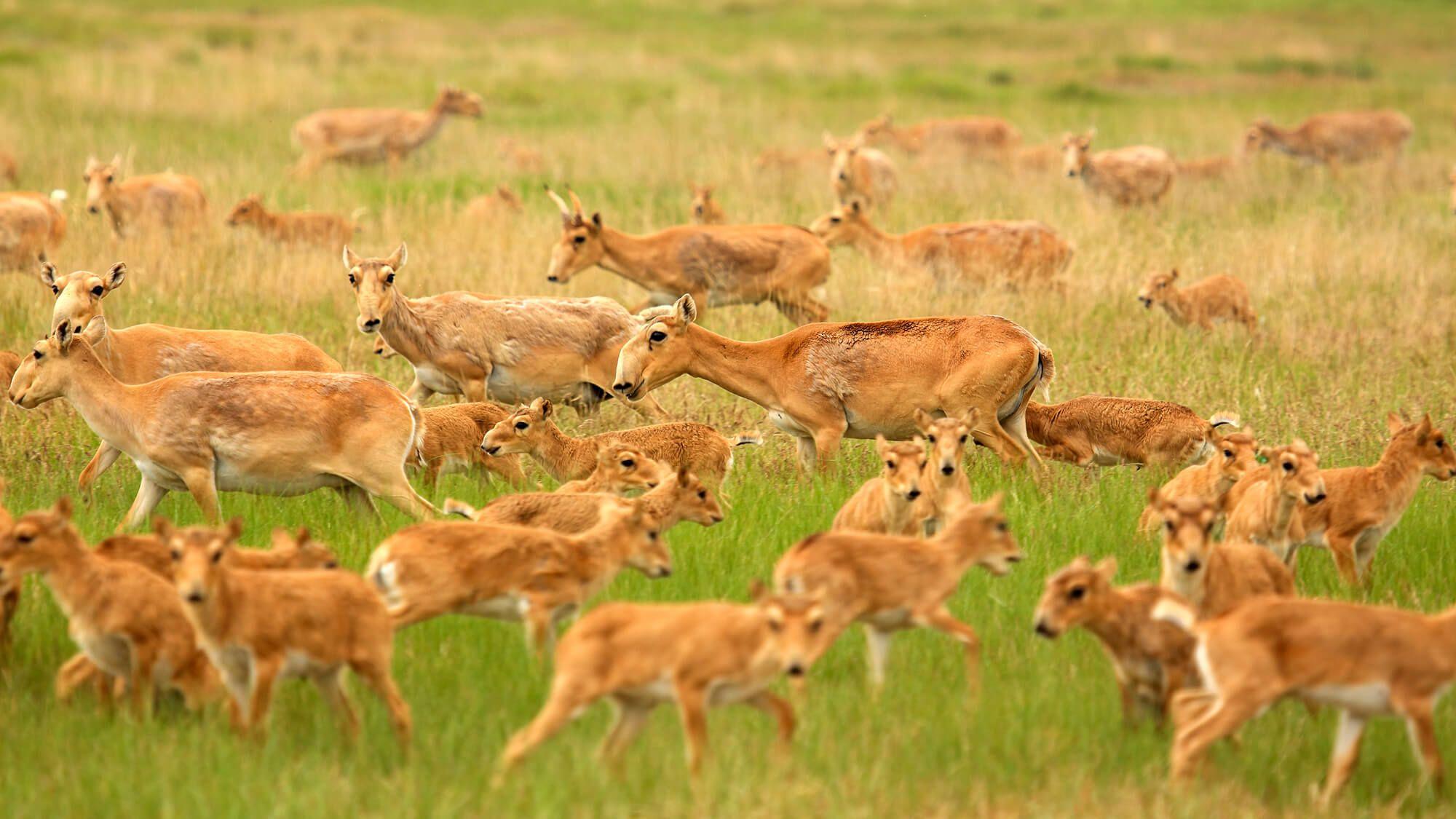 Saiga antelope herds after a successful calving season.
Photographer: Albert Salemgareyev
Saiga antelope herds after a successful calving season.
Photographer: Albert Salemgareyev“To protect and conserve the grasslands on a big scale will definitely bring benefits for the climate - not only for Kazakhstan, but for the region and the globe as a whole,” Vera explains.
From a village girl collecting mushrooms with her father to an executive director orchestrating the return of vanished species, Vera's journey embodies rewilding's deeper truth: it's about restoring the ancient symphony of life itself.
In the golden steppe where wild horses once again thunder across endless grasslands, that restoration continues - and with it, hope for our planet's most threatened ecosystems.
Most Popular


The Climate Tribe delivers stories about topics such as biodiversity and conservation, circular economy, food and water , and how they intersect with climate.
Enquire
Do you have a sustainability story that deserves to be told? Are you driving climate action in your community, or do you know someone who is? Let us know about it at [email protected]
Subscribe
Get the latest stories inspiring climate action around the globe straight to your inbox.